


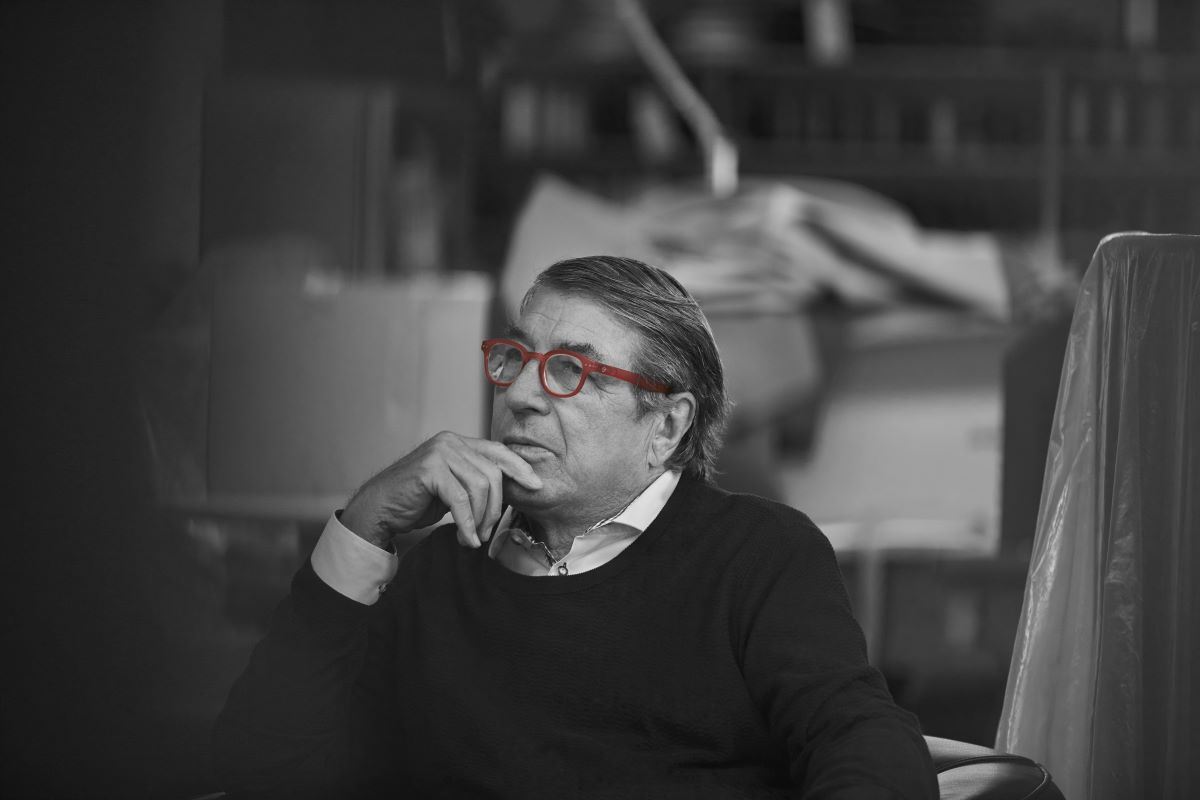
Klaus Nienkämper: The best of “The Best of the Best of Canada”
Nienkämper Furniture Inc. president, CEO and founder, Klaus Nienkämper, was the public figure journalists would tum to for an insider quote. He was the unofficial public face of the industry, perhaps because Nienkämper always hosted the smartest launch parties.
“We had a big responsibility because we were always looked at as bigger than we were,” said Nienkämper in his booming basso voice in an interview, who sponsored a student furniture-design competition. “We always wanted to do the right thing. We weren’t too concerned about ending up with a profit on the balance sheet.”
Part of the charm of a Nienkämper party was the showroom itself, the three-story red-brick Georgian house (1845) on King Street East with stone lintels, massive chimneys, and a Nienkämper wordmark supergraphic sprawling across the front and diagonally up the side. Like so much else about Nienkämper, it was precedent-setting: A lonely outpost in a grimy part of town when it opened in 1968, it quickly became the hub of a burgeoning design district. “There are more efficient places to show furniture, but that building is so much a part of our image,” Klaus said.
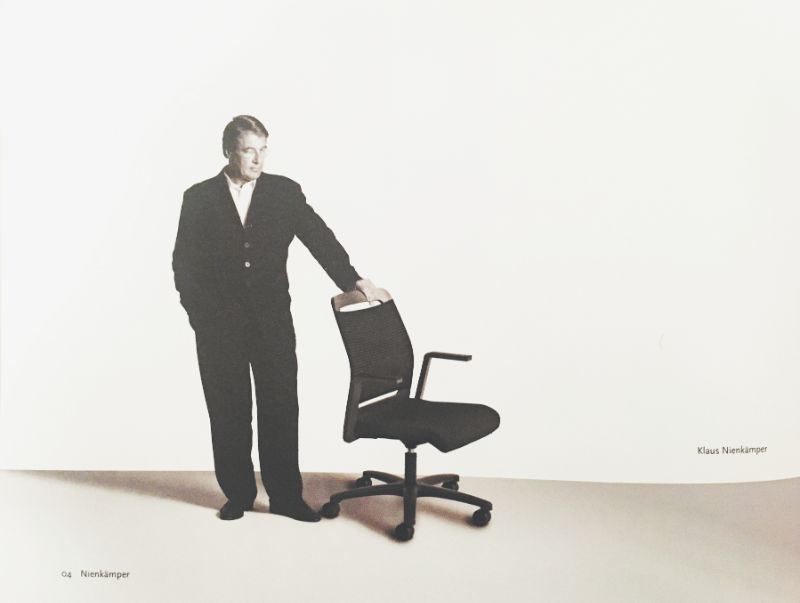
Then there was the lure of schmoozing with Klaus and his wife, Beatrix, who headed Nienkämper Accessories. Tall and handsome, and speaking English with a sophisticated-sounding German accent, they were often joined by their children Ottilie, Rebecca and Klaus 2nd, who also work in the family business. Together, they were the industry’s own glamorous Kennedy clan.
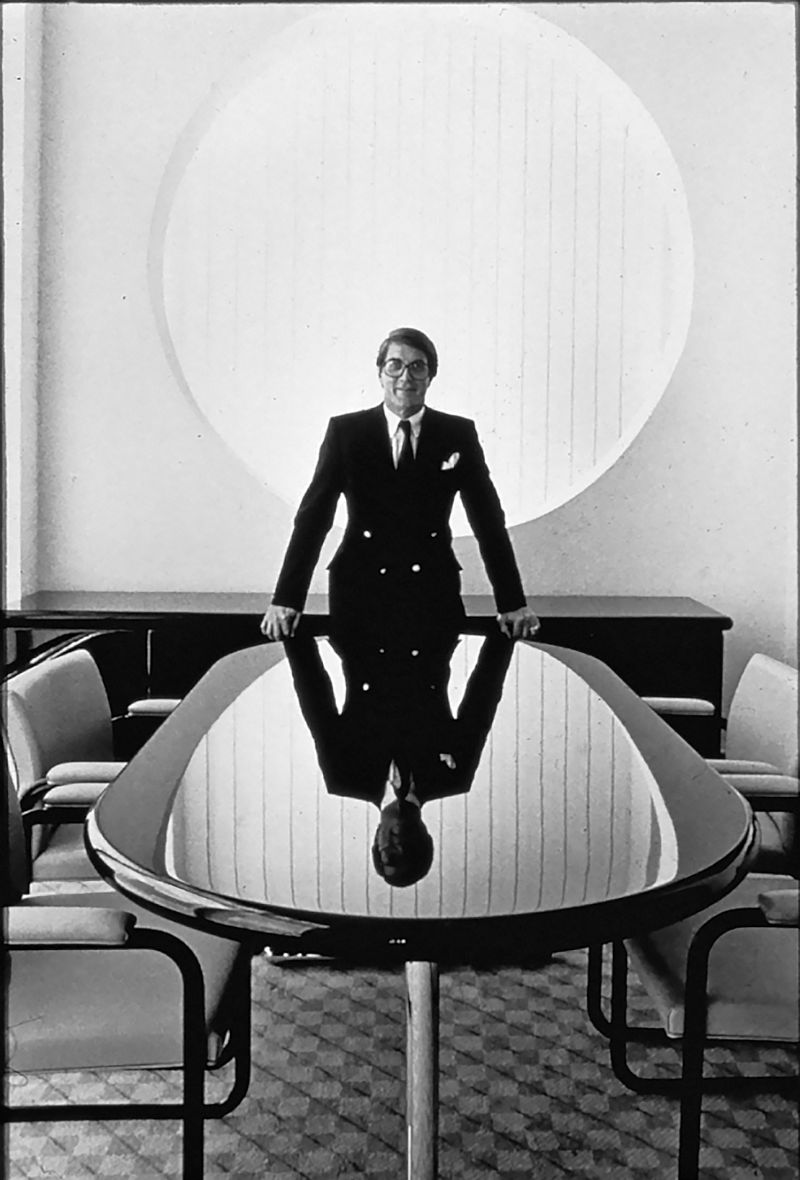
In my feature story The Best of the Best of Canada in the 2017 issue of Canadian Interiors celebrating the 20th anniversary of its Best of Canada Awards, I wrote that numerous worthy chairs, lamps, desks and other furnishings have won the Best Product Award, but only one, Nienkämper’s Vox videoconference table, rose to the level of industry game-changer, on a par with Ford’s 1908 Model T revolutionizing the auto industry. In 1998, Nienkämper created its own market niche: wood conference tables that unobtrusively accommodate wire cabling. Vox tables came pre-wired and arrive ready to plug in and use. As Klaus said, “Vox is disruptive. It’s something that gets delivered and you just plug it in, basically. You don’t have to call in the Bell telephone and electrician and all those things you normally do.”
Certainly, Nienkämper was innovative. “We have developed several processes in the factory that are unique to our company,” he said. “For example, veneering over convex and concave curves, which is quite unusual. In fact, we got a patent for it.”
Then there was their Billow chair, designed by David Rowland. Named for the profile of its seat and back, resembling a billowing sail, it was a thin, simple, innocuous-looking chair. Yet it boasted Wow! factor, a sensuous, springy aliveness derived from its patented Z-coil suspension (inspired by the compressor coils behind a refrigerator). The back’s lumbar curve uncannily sought out the small of your back, no matter your height, and stayed there, shifting with you as you turned to the right or the left.
Unfortunately, the Billow was too expensive to produce and proved short-lived. As Klaus later wistfully recounted, “I showed it to [chairman of Switzerland-based Vitra] Rolf Fehlbaum, one of the world’s authorities on chairs, who said, ‘This chair has a beautiful inner life, but no one is going to pay you for it.’”

Please also see herewith, a photo tribute by David Lasker, former Canadian Interiors editor and Scene photographer to Klaus Nienkämper (1940-2024), president and founder of Nienkämper Furniture & Accessories.:
https://www.canadianinteriors.com/2024/11/13/scenes-were-made-remembering-klaus/