


New exhibitions launching at AGO and Vancouver Art Gallery (updated)
New exhibitions are set to hit the Art Gallery of Ontario (AGO) and Vancouver Art Gallery (VAG) this spring.
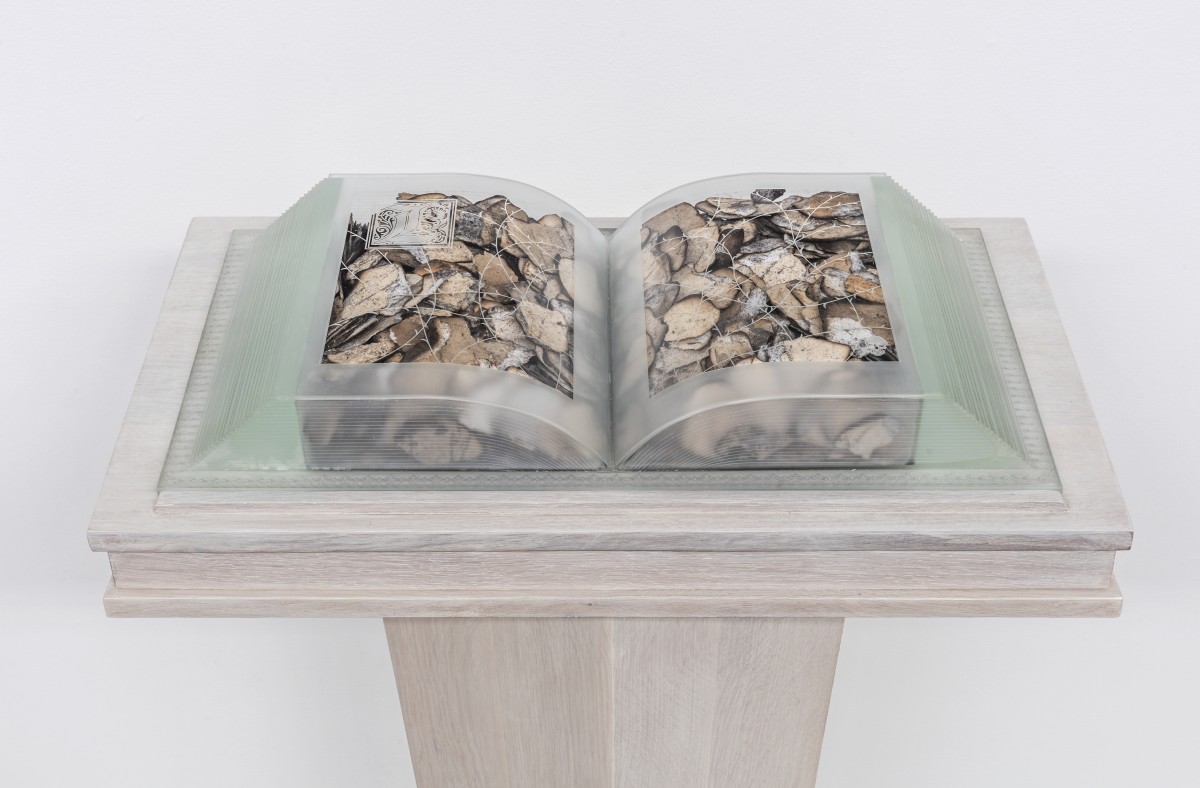
The AGO is presenting a solo exhibition by Toronto image maker Tim Whiten. The exhibition by Whiten, who is celebrated for his works that bridge the physical and spiritual realms, will open on Wednesday, March 26, 2025.
Tim Whiten: A Little Bit of Light is a solo exhibition that marks Whiten’s 2022 Gershon Iskowitz Prize at the AGO award for his contribution to Canadian art. On view in the Philip B. Lind Gallery and curated by the AGO’s deputy director and chief curator Julian Cox, the exhibition spans five decades of artistic production and includes works on paper, three-dimensional objects, and mixed media installations. The exhibition will showcase the depths of Whiten’s visual language, and objects will be brought to life in leather, bone, stone, and glass.
“Attuned to the transcendent potential of objects, and drawing upon various spiritual traditions, mythologies, and rituals, Whiten invites viewers to sense, rather than overtly read, his artworks,” said Cox. “In his choice of materials – sandblasted glass, lemon juice, coffee, animal skins, or tree branches – and in his elevation of everyday objects, there is a conviction that the physical and spiritual are entwined. Whiten’s practice invites audiences to explore the depths of spirituality, the nature of consciousness and the importance of ancestral knowledge.”
Since the early 1970s, Whiten’s work has included bones, lemon juice, wood, leather, coffee and natural fibers. These organic materials, with a capacity for decay and mutation, aligns with his belief in their ability to “bridge the physical and spiritual realms.” A minimalist sleeveless leather dress, brought to life by a shark jaw bursting out of its chest panel, will be on loan from the Art Gallery of Hamilton, Awk (1989). This dress aims to serve as a reminder that what lies beneath cannot be concealed.
In the mid-1980s, Whiten began incorporating glass into his work and says that transparency is “the key to an understanding of the physical world and the infinite.” A memorial to Whiten’s mother, Mary’s Permeating Sign (2006) is also a personal form of homage, while a life-sized glass rocking horse Lucky, Lucky, Lucky (2010) explores how “play allows us, in many cases, to go to another world.”
Tim Whiten: A Little Bit of Light will be on view until August 17, 2025, and will feature 36 works, drawn from the AGO collection, Whiten’s studio, the holdings of Olga Korper Gallery Inc., as well as public and private lenders from across the province.
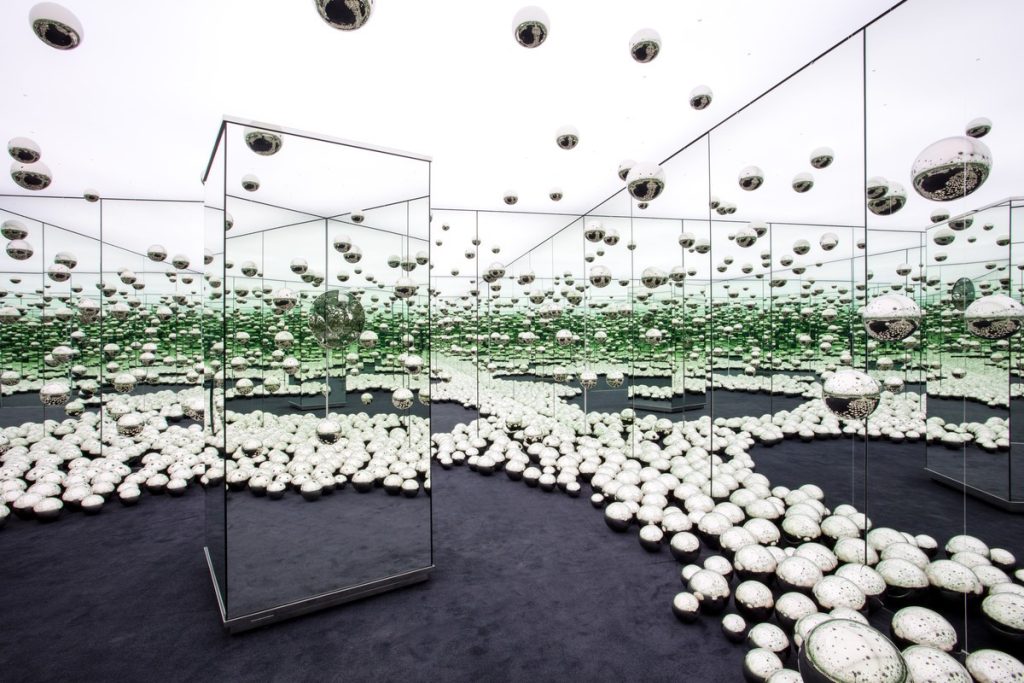
Following a successful tour of American museums, Kusama’s immersive installation INFINITY MIRRORED ROOM – LET’S SURVIVE FOREVER is returning home to the Art Gallery of Ontario (AGO) this month. Reopening on Saturday, April 5, 2025, for AGO Members, and on Tuesday, April 8, 2025, for everyone, the artwork will be on view in the Sam & Ayala Zacks Pavilion at the AGO on Level 2.
For over 70 years, Japanese artist Yayoi Kusama has invited people to participate in her visions of infinity. Over the past 30 years, this artist has become an internationally acclaimed art-world icon.
Born in 1929 in Matsumoto, Japan, Kusama’s work has been featured in solo and group exhibitions. She presented her first solo show in Japan in 1952. In the mid-1960s, she lived in New York where she became an important avant-garde artist. In 1965, she produced her first Infinity Mirror Room, an artwork which used mirrors to create an illusion of infinite space. Since then, Kusama has made more than 20 unique rooms.
INFINITY MIRRORED ROOM – LET’S SURVIVE FOREVER features mirrored spheres suspended from the ceiling and arranged on the floor. A mirrored column inside the room also invites visitors to peer into what seems like an infinite field of silver orbs. The exhibition is now part of the AGO Collection thanks to the generosity of over 4,700 #InfinityAGO donors who participated in the AGO’s crowdfunding campaign and the David Yuile & Mary Elizabeth Hodgson Fund.
The artwork will be closed for regular maintenance every Wednesday and Friday between 4:00 p.m. to 4:30 p.m. and Saturday from 3:00 p.m. to 3:30 p.m. The artwork may also be closed from time to time, sometimes without notice.
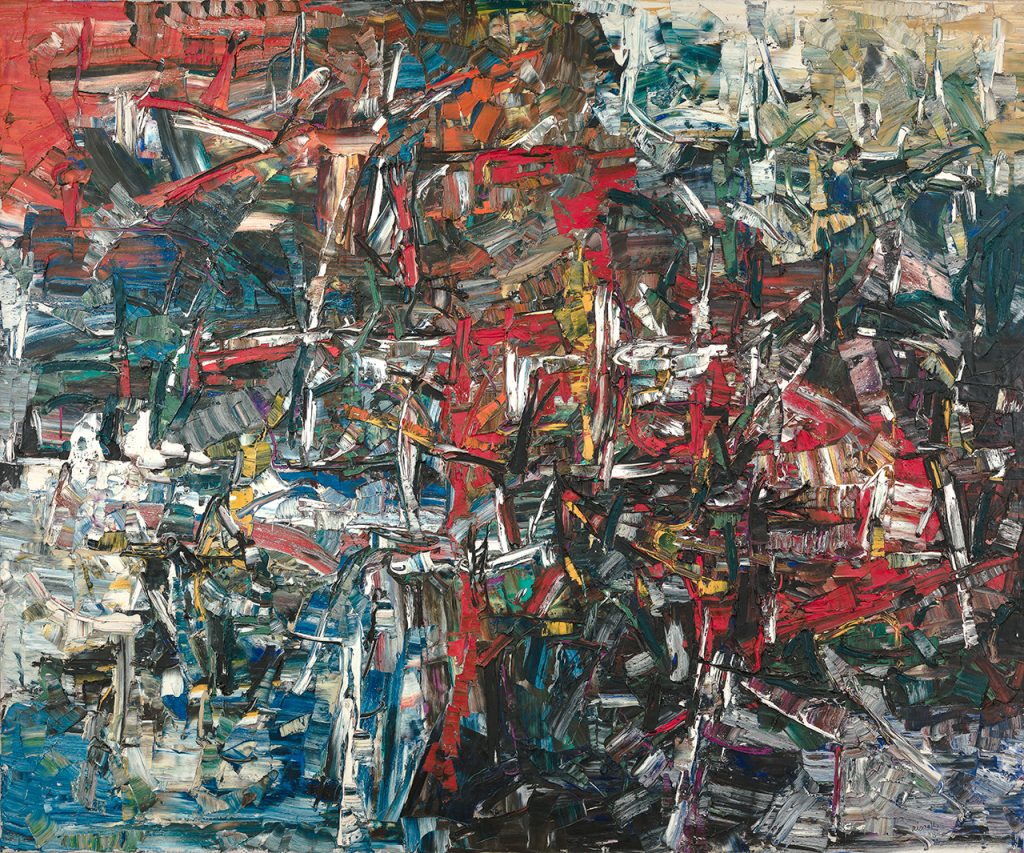
The Vancouver Art Gallery is presenting the largest exhibition of works by Jean Paul Riopelle (1923–2002) in Vancouver’s history. Riopelle, a towering figure in Canadian art, remains one of the nation’s most significant artists of the twentieth century.
Organized by the National Gallery of Canada to mark the centenary celebration of the artist’s birth, Riopelle: Crossroads in Time brings together almost 100 works drawn from 20 Canadian and international private and public collections, including two paintings from the VAG’s permanent collection.
This exhibition, guest curated by art historian and independent researcher Dr. Sylvie Lacerte, aims to offer an original take on Riopelle’s creative output, and highlights his commitment to freedom of expression, his experimental ways of working, and his visionary and innovative approach.
Riopelle: Crossroads in Time is part of the Jean Paul Riopelle Centenary celebrations, a global initiative of the Jean Paul Riopelle Foundation that honours “the boundless creative spirit and enduring legacy of one of Canada’s most iconic artists.” The celebrations were started back in 2019 by renowned philanthropist and collector Michael Audain, chair of the Audain Foundation, and past chair and co-founder of the Jean Paul Riopelle Foundation.
Spanning five decades of Riopelle’s creative journey, Riopelle: Crossroads in Time aims to recognize the breadth of his imagination and diversity of his work and interests. The exhibition is organized chronologically to highlight his practice and periods of creativity, from the popular works of his youth, such as Le perroquet vert [The Green Parrot] (1949), to his final works, including Sans titre (Autour de Rosa) [Untitled (Around Rosa)] (1992).
Early works from the 1940s mark the development of a spontaneous painting style inspired by his brief time as part of Les Automatistes, an influential group of Québécois artists. By the 1950s, his signature style was “mosaic,” in which he manipulated the paint with a palette knife to create bold shapes and energetic compositions. The exhibition spotlights several canvases from this period, including La Roue II [The Wheel II] (1956) and Chicago II (1958).
In the 1960s, Riopelle moved between sculpture and painting, and the exhibition features several bronze sculptures from this period, as well as paintings and prints created in the 1970s that were inspired by the imagery and atmosphere of the Far North. His final work from the 1980s and 1990s represents a turn with colourful panel paintings peppered with spray paint and glitter.
The exhibition will be on view until September 1, 2025.