


“There Is No Alternative?”: Re-designing design education
“Can the scenario of Canada becoming the 51st state be considered a design problem?”
One of my design students recently asked this, raising a critical question: what is design’s role within the crises we are facing? To what extent is the design community prepared – or even willing – to actively confront troubling global trends, whether the creeping rise of authoritarianism, the steady eradication of the middle class, or the negligent destruction of eco-systems?
As a design educator with a focus on socially-oriented design, I am increasingly confronted by sentiments of helplessness from students who feel that the possibility of any real change is hopeless and naïve and that there is no alternative to our current trajectory of a downward spiral of interlinked and quickening crises.
Design is often heralded as one of the key drivers of innovation, being a fusion of creativity, problem-solving, and knowledge of materiality (bodies, spaces, aesthetics, objects). Yet design innovation today largely sustains the status quo of rendering the current system a bit more functional, a bit more efficient, and ultimately more palatable. What about a design that challenges that system? Where is design as a critical practice that is autonomous — or in the language of our politicians “sovereign” — from the forces that are hell-bent on abandoning sustainable futures for short term gain. To put it simply, what alternatives are designers producing for a world in crisis?
From hope to despair: TINA
It wasn’t long ago when There is No Alternative (TINA) was an expression of hope for the future. TINA was a political slogan initially employed in the 1980s by former Prime Minister of the United Kingdom, Margaret Thatcher, and later by other centre-right neo-liberal politicians across the Western Hemisphere. The slogan implied that economic liberalism / fiscal conservatism was the final stage of our political and economic evolution. We had reached the final plateau, succumbing to “common sense.” From here on out, governance was a matter of technocratic tweaks and fiscal managerialism.
TINA’s validity was “confirmed” by the fall of the Iron Curtain and dissolution of the Soviet Union, a purported proof to doubters that we had entered the final stage of our ideological evolution. In the (in)famous words of Francis Fukuyama, this was the “end of history,” the end of the ideological evolution of humans and the production of the last and final stage of humankind.
TINA became self-congratulatory, embodying the spirit of post-cold war victory, the banishing of the Marxist spectre and the self-interested delight as new markets opened up across the globe. A new kind of liberal order was emerging and with it, politics and culture was being continuously stripped of overt ideological positions, preferring the clever, satirical and mischievous over the dry, critical and argumentative. These were the days of Bill Clinton’s saxophone, Tony Blair’s Cool Britannia, and the reverberating echoes of postmodern design complete with the ambiguities and messy ornamentations that epitomised Venturi’s “less is bore” design aesthetic. Design, like so many other fields, favoured irony over ideological engagement, swapping grand social visions for playful contradictions.
Fast forward to the present and my students view the 1980s, ‘90s and early 2000s as wasted decades of haughty excess, myopic self-aggrandisement and vacuous politics. What I remember as a time of optimism, freedom to experiment, and an era of stability and prosperity, they see as the root of our current social and ecological decline.
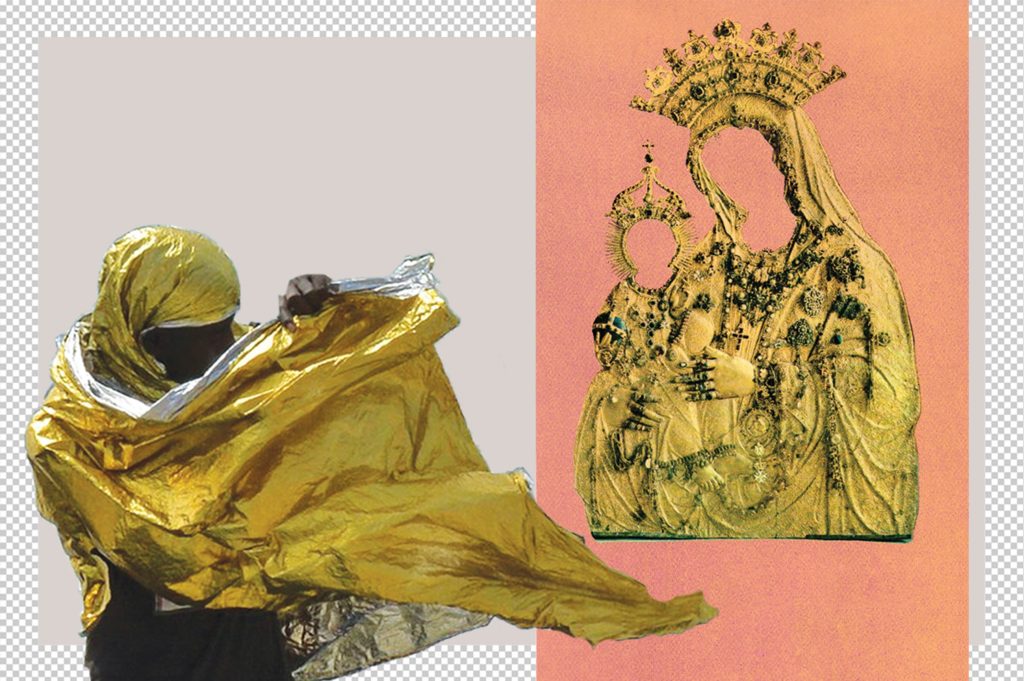
Today, TINA is no longer a slogan of hope but of menace, the resignation to a tragic inevitability. “No Alternative” has come to mean that we are bound to our fates, including the massive impoverishment of society; the widespread eradication of species (including humans); and loss of viable democratic participation. Such a view transforms “the end of history” not as a celebration of the stability of the liberal order as praised by Fukuyama, but rather the end of history as in the quick and inevitable decline of civilization.
And where is design in all of this? Where are the alternatives being produced and cultivated? Certainly not within industry or at design fairs. Most disheartening of all is the lack of meaningful discourse in design education, which remains a fulcrum for design culture. Instead of fostering critical inquiry, most design programs continue to perpetuate and reinforce the values of external forces — whether the market or status-quo politics — while neglecting society’s most urgent questions. At best, they offer uncritical solutions to poorly examined problems.
Critical design education: Moving beyond apathy
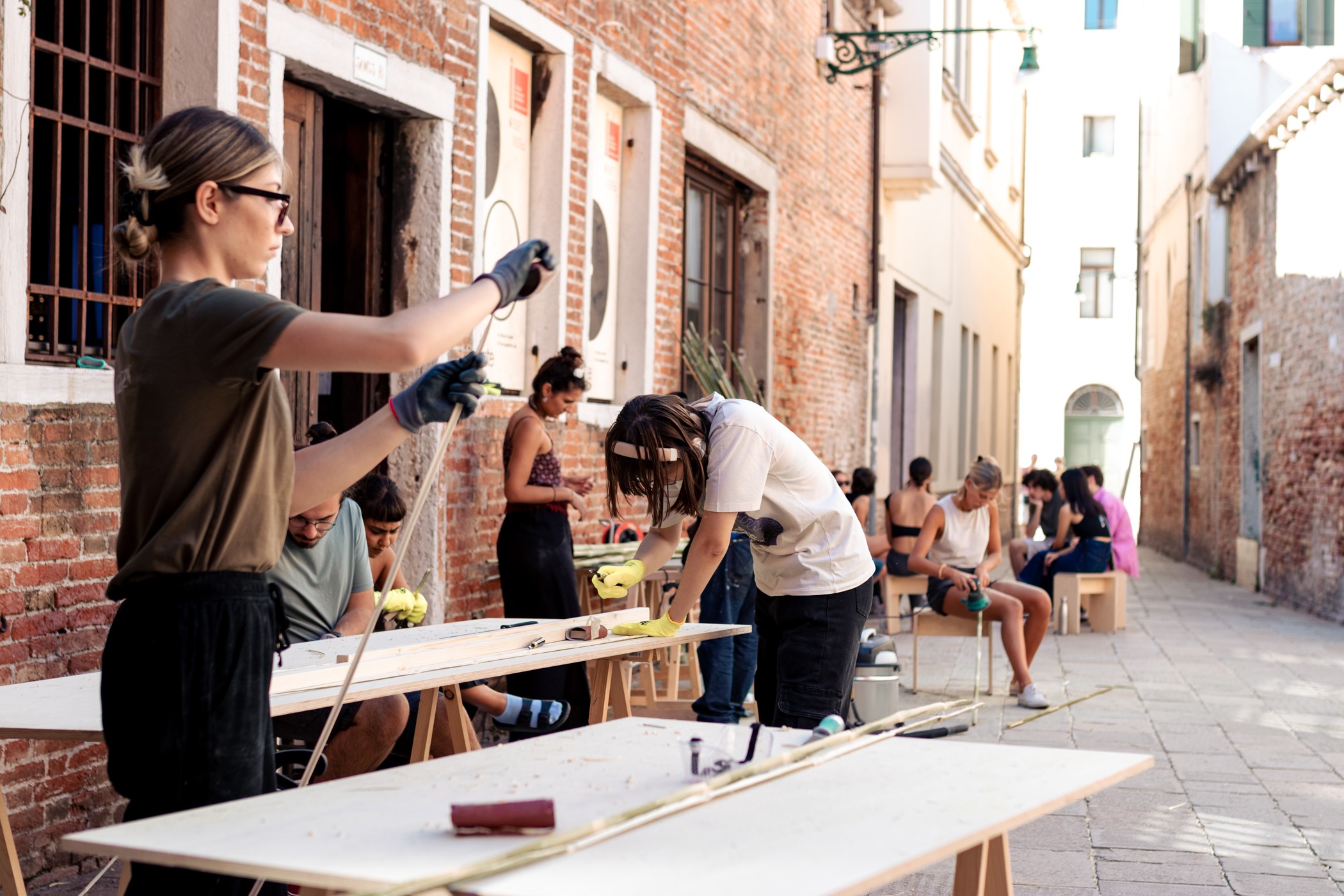
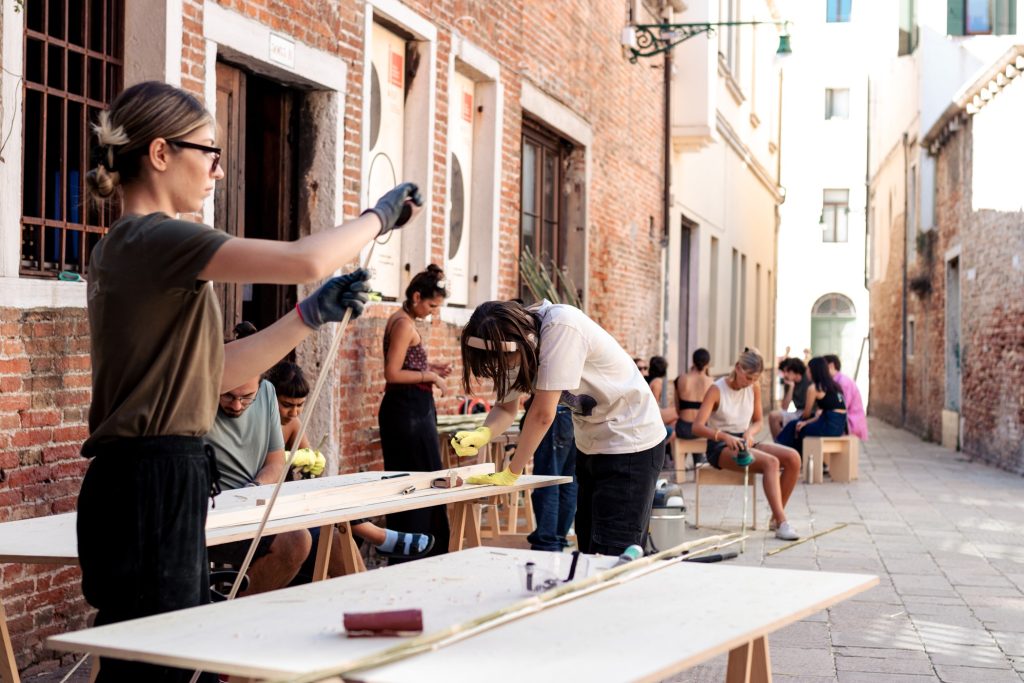
Which is why my colleagues — Anna Maria Orrù; Zeno Franchini; Adrian Vickery Hill; and Francesca Gattello — and I are on a mission to alter this slide into the apathy of TINA through reconceiving design education. To do this, we have developed a Masters’ program where students are embedded within marginalized communities and ecological contexts. They work from the ground up, learning to identify needs, interpret power dynamics and navigate the politics and ideologies that vie for control. We see this as a crucial foundation for a new generation of designers who will actively engage in wider social, political, ecological and economic crises.
First, we foreground relationality as the guiding framework for design. This is a perspective that sees humans, other species, objects and other forces as deeply entwined. With such a perspective, design is inherently a social, ecological and political practice because it is a practice that alters and intervenes in this meshwork of relations. Designers love the quote “Objects have agency too” by French philosopher Bruno Latour, because this is something we’ve always known: that objects interfere, stabilize, influence, shape and disrupt the many relations, processes, practices and ideas that hold together our world. If we take Latour and other new materialist philosophers seriously, then design has an oversized capacity for shaping the world, not limited to producing the non-critical innovations that keep systems functioning but more importantly in directly challenging the status quo and in producing new visions, relations and realities.
Secondly, we see design as an autonomous practice. For too long design has been co-opted by different economic interests and political forces as a means for whitewashing, greenwashing or soulwashing. With this in mind, we ensure that students understand the complex role design plays within the functioning of power and ideology within our society. As Canada is currently witnessing, to be ambivalent about one’s values, position, intentions and allies is to risk being absorbed or co-opted by others who are clear and confident about theirs, regardless of how misguided these may be.
A key problem we address is how design education and the broader design culture has been oriented towards fulfilling a brief or commission, not questioning the brief or commission. For example, it appears (at face value) that designers today prefer to satisfy the design brief of hostile-architecture such as anti-homeless spikes or slanted and divided benches than they are to seek out ways to engage (creatively or otherwise) with the debate around social housing and rough sleeping. The reason is that it’s increasingly difficult to conceive of design as a politically engaged practice, one that is autonomous from market logics and the authority of the design brief.
Lastly, we focus on resituating design, to return to the local scale, to be embedded and engage with communities (human or otherwise). I am a firm believer that in bringing design into the real world and out of the siloed classrooms and insulated studios, we resist the facile tendencies to project user personas, experiences and realities and instead begin to live in these communities, being both designer and user, empathic and critical. This shifts design away from technicians and experts, resituating it as a regenerative practice of everyday life.
The major crises of today, whether they be related to poverty, migration, ecology or Canada’s sovereignty, are certainly design problems: dealing with them demands the creativity and capacities of designers who are able to demonstrate that there is an alternative. It is time to shift design education away from fulfilling insular briefs, producing superfluous objects, and attending to market demands, and instead orient it towards contributing to the greater good.
View this post on Instagram
Michael Kaethler is co-head of the Master’s Program Social Ecological Design at the European Institute of Design (IED). He is the author of multiple design-oriented publications including the books Social Matter, Social Design (2020); The Auto-Ethnographic Turn in Design (2021) and the forthcoming In-Hospitable Times: Design and Otherness (2025) and Imaginative Ethnographies: A User’s Guide (2025).
As featured in the May-June 2025 issue of Canadian Interiors magazine.