

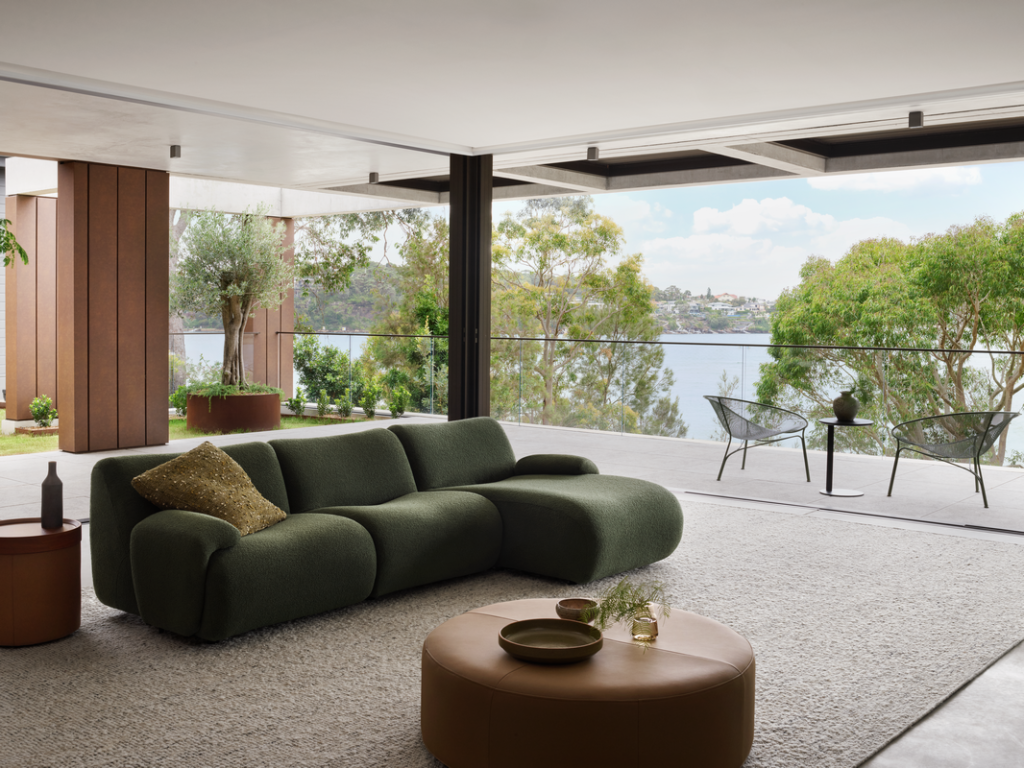
For decades, longevity in furniture has largely been measured by a straightforward question: how long will this product last? Durability is fundamental, but it’s only part of the picture.
People don’t live static lives. We move homes, our families grow, our routines change and our spaces evolve alongside us. Yet furniture has often been designed for a single moment in time rather than for the many stages that follow.
As designers, we shouldn’t be too prescriptive about how someone is going to live with a piece of furniture. We can’t predict exactly how someone will be living in 10 years, nor do we need to. What matters is creating enough flexibility in a design that it can respond when life changes.
Our homes are increasingly expected to accommodate different needs and ways of living. The question we should be asking isn’t simply how long a product can survive, but whether it can continue to support the way people live as their lives change.
That’s where the conversation around longevity needs to go. Beyond physical durability, longevity is also about continued relevance. When furniture can adapt alongside the people who own it, it has a much greater chance of remaining part of their lives for years to come.
Timelessness is more than aesthetics
Timeless design is often understood in purely visual terms, something achieved through restraint, enduring materials and avoiding trends. But timelessness is just as much about continued relevance. A product can still look beautiful decades later, but if it no longer works for the person living with it, its longevity is limited.
The designs that stand the test of time are those where aesthetics, functionality and engineering work together naturally. Durability gives a product the foundation to last, but adaptability is what allows it to remain relevant as people’s needs, homes and lifestyles change.
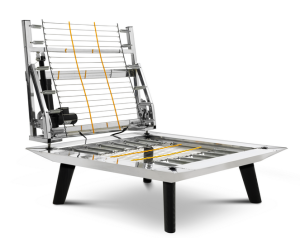
That adaptability needs to be considered from the beginning. At King Living, we approach the product as a complete system, considering how the structure, comfort, covers and modular components work together not just when a design is first created, but over the course of its life. A durable steel frame provides the foundation for furniture to be reconfigured and adapted, while removable covers allow the design to be refreshed over time.
Modularity is part of that same approach. It’s not simply about arranging individual sections in different configurations; it must be engineered into the product. The frame, connection points and components all need to work together so a design can evolve without compromising its integrity. That’s the difference between adding flexibility as a feature and designing for it from the outset.
Designing for more possibility
Designing flexibility in from the outset means looking beyond a product’s immediate use. Individual spaces are increasingly expected to serve multiple purposes throughout the day. For designers, the challenge is to respond to that complexity without passing it on to the person using the product. Furniture should work harder without becoming more complicated. That means looking for opportunities to build in genuine utility, whether through modular seating that can be reconfigured, integrated storage that makes better use of the space available, or technology such as wireless charging that supports the way we live today.
Innovation only has value when it solves a genuine problem or improves the experience of living with a product. Modularity is a good example. Rather than designing around one fixed configuration, it creates choice, allowing a setting to expand, reduce, move between spaces or be reconfigured when needed.
That’s ultimately what adaptability should do: create more possibilities without adding complexity to the experience. The designer’s role is to resolve that complexity behind the scenes, so the person using the product never has to think about it. When it’s done well, the solution feels intuitive even if the thinking behind it is anything but.
Reframing sustainability around longevity
That same principle has implications beyond functionality. Many of the decisions that determine a product’s longevity — how it is engineered, whether it can be repaired, renewed or adapted —are made at the very beginning of the design process. This becomes increasingly important as the conversation around circularity shifts towards keeping products and materials in use for longer.
Sustainability is rightly discussed in terms of materials and manufacturing, but longevity must be part of that conversation too. If a product can be repaired rather than replaced, refreshed with new covers or adapted over time, we give people genuine alternatives to replacement and allow a product to remain in use for far longer.
But physical durability is only part of it. There’s an emotional dimension to longevity too. We’re more likely to keep the things we continue to value, enjoy and feel connected to. A product might be engineered to last for decades, but truly enduring design gives someone a reason to want to keep it for that long.
One of the most sustainable things we can do as designers is create products people never feel the need to replace. When longevity is considered from the outset, sustainability isn’t something we add to a design later, it becomes part of the design itself.
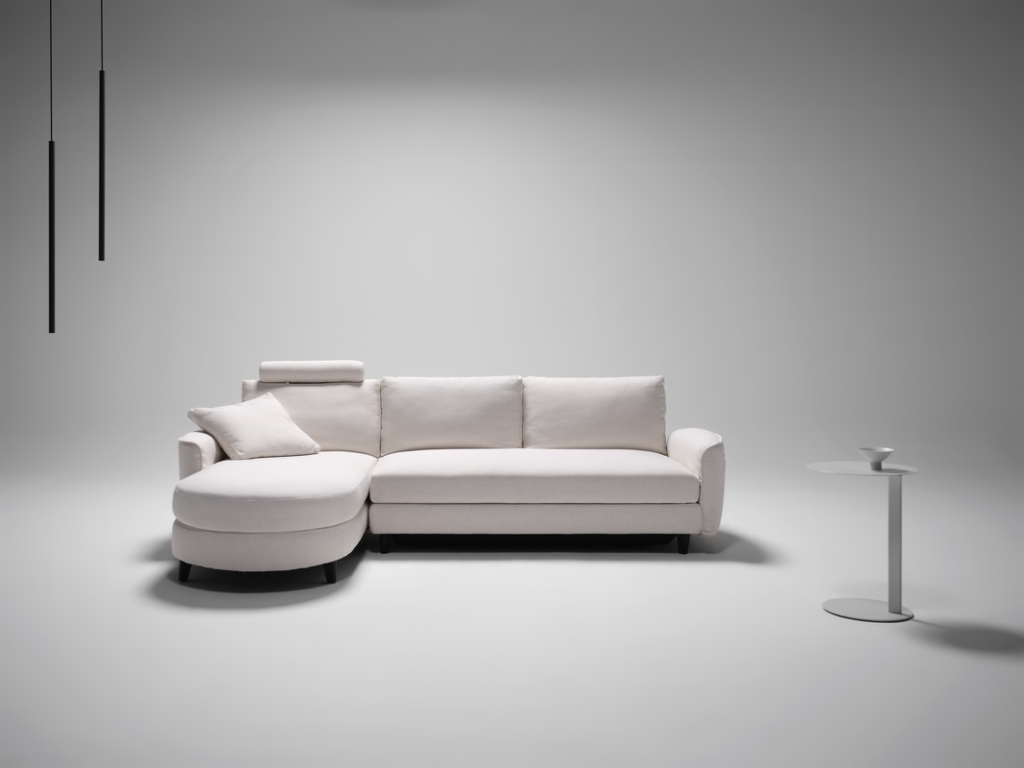
Looking beyond day one
That same long-term mindset should inform not only how we design, but how we select and specify for a space. The finished installation is only day one; the more interesting question is how that product will perform five, 10 or 20 years from now.
That means looking beyond aesthetics and asking more of the design. How is it engineered? Can it adapt if the space or brief changes? Can individual components be repaired or replaced? Can it perform more than one role? Can it be renewed without replacing the entire piece? These questions start to reveal not just how well something has been designed, but the value it can deliver over its lifetime.
The best specifications aren’t simply about creating a beautiful outcome on day one. They consider what happens on all the days that follow, selecting products that continue to perform and support the integrity of the space, while giving people a reason to value and keep them over time.
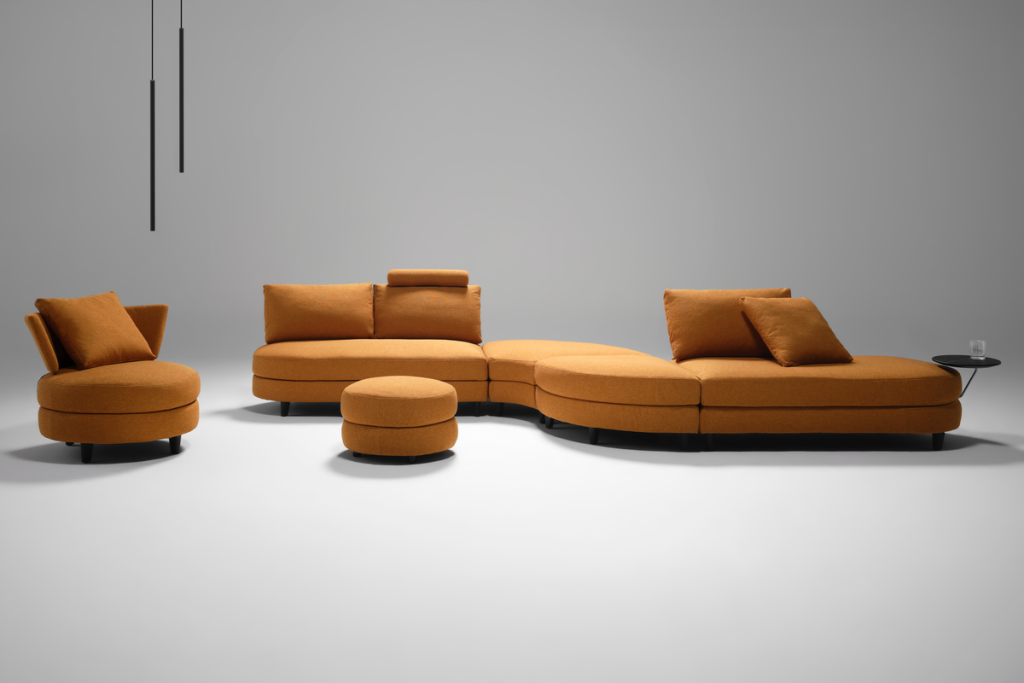
The Long View
Perhaps the clearest measure of thoughtful design is what happens long after the original design decision has been made. At King Living, we still see customers with furniture purchased in the 1970s, ’80s and ’90s choosing to recover and refresh their designs rather than replace them. There’s something significant in that. Physical durability has allowed the furniture to last, but emotional durability is what has given someone a reason to keep it. Decades later, the design still has a place in their life.
That brings us back to what longevity in design really means. The designs that truly endure do more than survive. They continue to perform, adapt and feel relevant, giving people a reason to value them long after the moment they were first designed for.
We can’t predict exactly what the future will look like, and good design doesn’t need to. Our role is to create with enough thought, flexibility and purpose that a design can continue to earn its place, whatever comes next.
Chris Cooke is Head of Design at King Living.