


Canadian exhibitions to explore typography, cultural identity, and storytelling
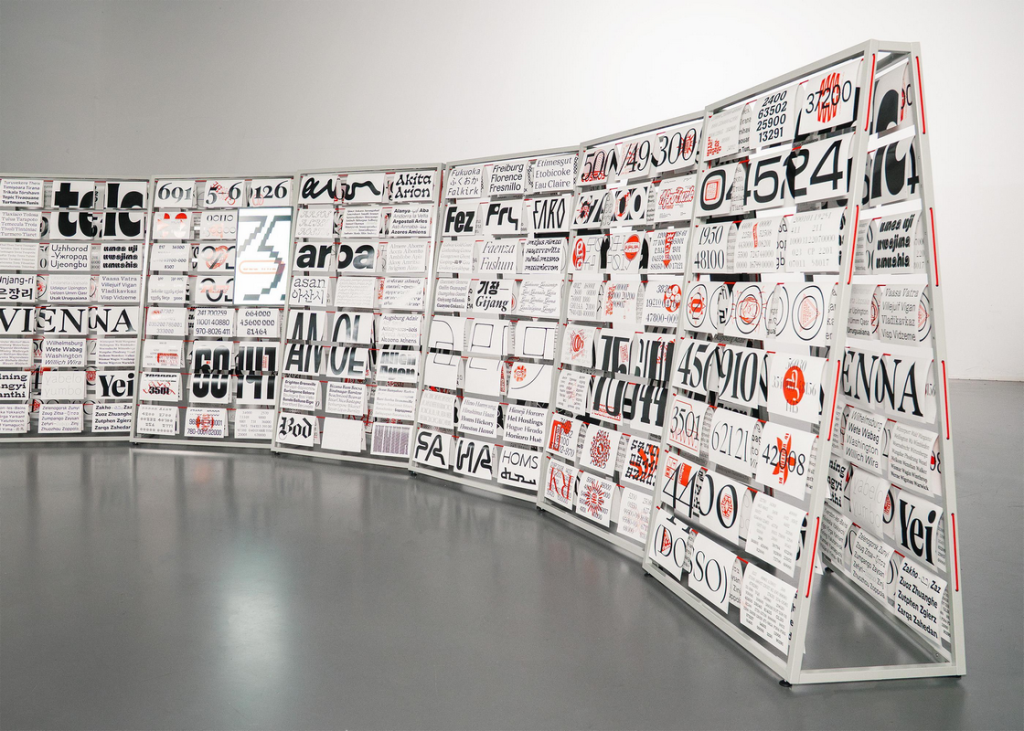
ECAL A Typographic Atlas at UQAM’s Centre de design
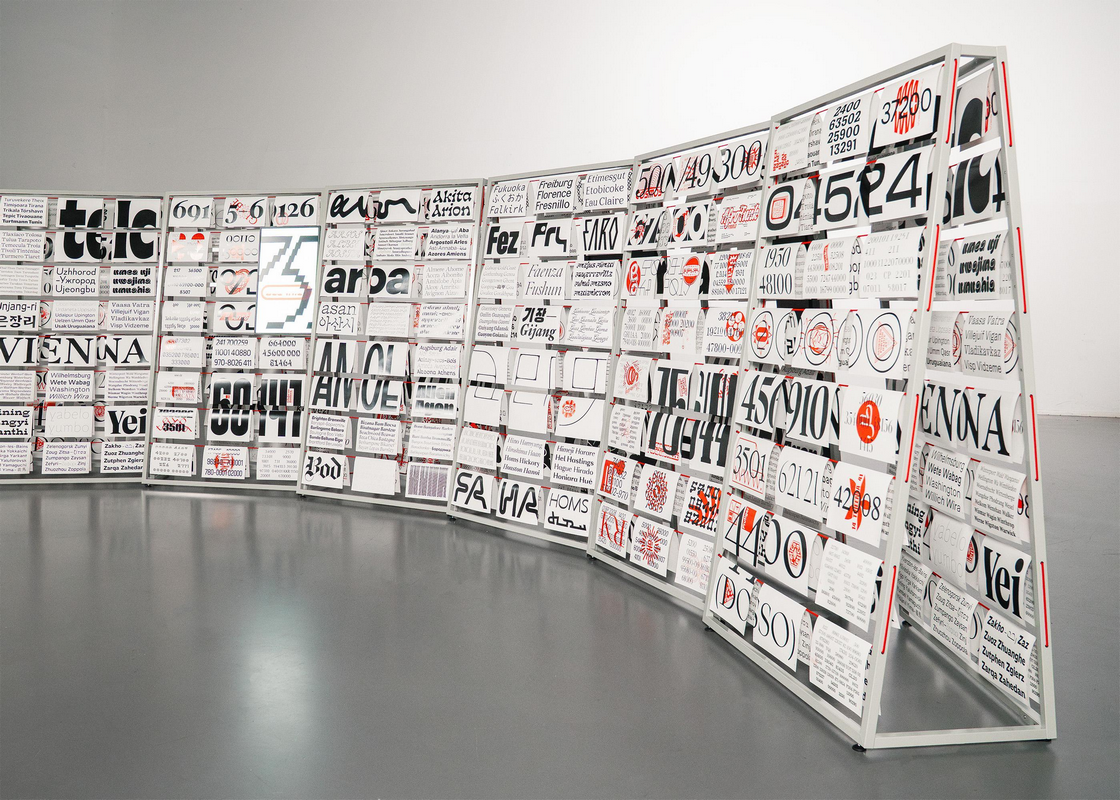
The traveling exhibition, originating from the École cantonale d’art de Lausanne (ECAL), brings together more than 300 typefaces from its Master Type Design and Bachelor Graphic Design programs. Initiated by Angelo Benedetto and Matthieu Cortat-Roller, both program directors at ECAL, the exhibition will be presented at UQAM’s Centre de design and feature a section devoted to Québec typographic creation and an immersive multilingual projection installation. Since its founding in 2016, ECAL’s Master Type Design program has welcomed hundreds of students from 27 countries. For its presentation at UQAM’s Centre de design, the typographical atlas is enriched with a local component developed by Louise Paradis, a professor at the École de design, in collaboration with UQAM’s École de design and the 2026–2027 cohort of Collectif 1440, a type foundry created in 2025 by École de design students.
The Québec component of the exhibition also features a 360-degree immersive installation in which some thirty languages take shape through typefaces. The installation transcribes, in real time, interviews conducted with international and Québec designers, in thirty languages. Composed from typefaces drawn from ECAL’s corpus and the Québec selection, these contributions take on particular resonance in the Québec context, marked by a plurality of languages and relationships to writing. Visitors will discover, among others, Julia Born, a Swiss graphic designer and winner of the 2021 Swiss Grand Prix for Design, and Fabian Harb, a Swiss graphic designer and type designer, who co-founded Dinamo with Johannes Breyer in 2013.
The exhibition will be on view from September 10 to October 4, 2026.
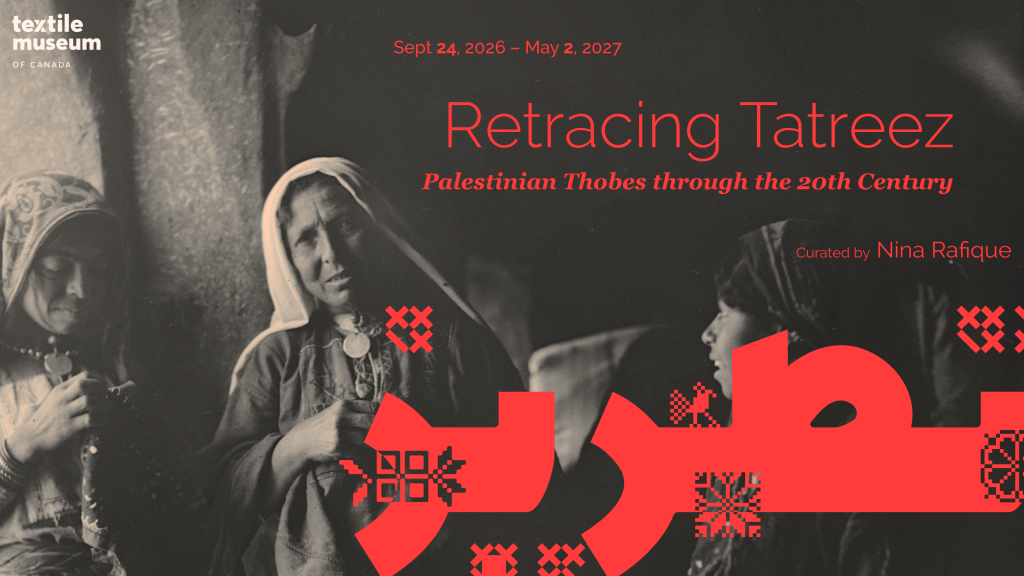
Retracing Tatreez: Palestinian Thobes through the 20th Century at the Textile Museum of Canada
Featuring several examples of Palestinian tatreez (embroidery) from the Textile Museum’s collection, most of which will be exhibited for the first time, Retracing Tatreez highlights what these belongings can tell us about the relationship between Palestinians and their homelands in the 20th century and beyond. Traditionally passed down from mother to daughter, Palestinian tatreez is a historic embroidery practice rooted in the flora, fauna, and everyday landscape of Palestinian life. Women in the towns and villages of historic Palestine stitched their stories into thobes and jellayeh (dresses and coats), developing regional motifs, colours, and styles that reflected ways of life in their homelands. Through tatreez, a woman’s hometown, family, and relationship to the land around her could all be communicated in the practiced language of her stitches.
The Museum’s collection of 20th-century tatreez was acquired after the Nakba (Arabic for “catastrophe”), which refers to the mass displacement of approximately 750,000 Palestinians from their ancestral homes during the establishment of the state of Israel in 1948. Like many Western collections of Palestinian dress, the thobes and embroidery fragments in this exhibition were acquired by non-Palestinians long after being looted, left behind, or separated from their original owners. In this exhibition, curator Nina Rafique showcases these pieces with restored historical context and invites visitors to re-engage with their ways of storytelling.
The exhibition will be on view from September 24, 2026, to May 2, 2027.
Housing on the Line by Superkül
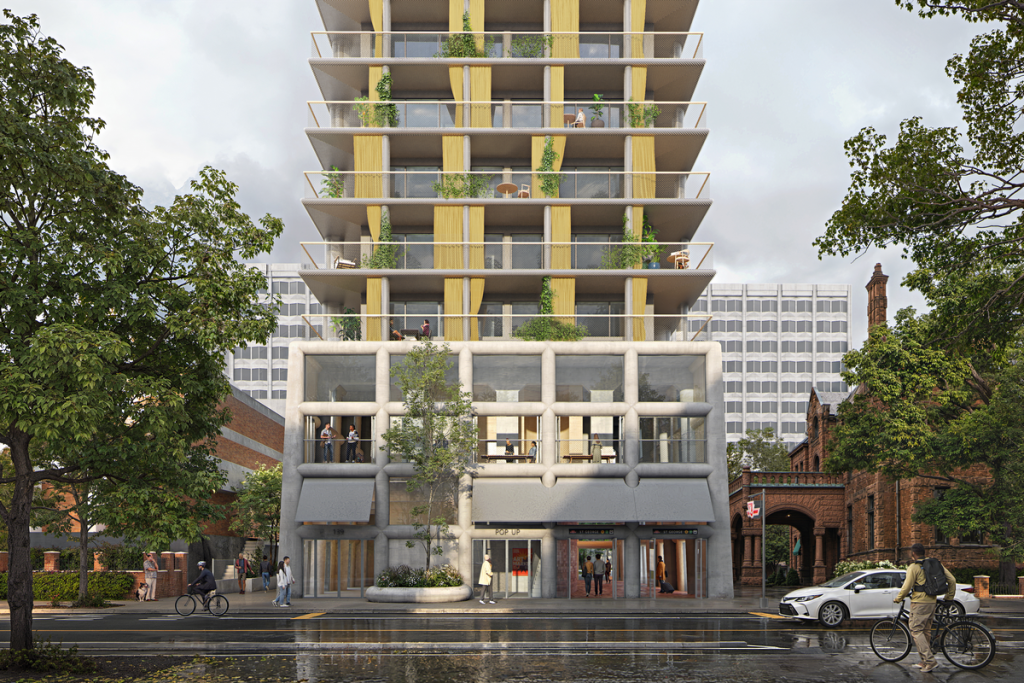
Housing on the Line, a conceptual project and architectural exhibition conceived and initiated by Superkül, will open to the public on Thursday, September 24, 2026, in Toronto’s Liberty Village. Developed in collaboration with six other firms, COMN Architects, Dubbeldam Architecture + Design, Gabriel Fain Architects, StudioAC, Studio VAARO, and Suulin, the project proposes speculative designs that integrate multi-unit residential buildings with smaller existing subway station sites along TTC Line 2 Bloor-Danforth. Each firm’s proposal treats a different subway station along Line 2 as a creative canvas for imagining innovative typologies and context-appropriate design that delivers human-scale character, enhanced amenities, and community connectivity.
Against the backdrop of an ongoing affordability crisis as well as the city’s push to create more transit-oriented communities, Housing on the Line invites visitors to think beyond the conventional boundaries of site, urban planning, and infrastructure development, and asks, “What if we could put housing on top of existing subway stations? Is it possible to reimagine standing infrastructure that wasn’t designed with a second use in mind? How could we use transit infrastructure as a substrate for beautiful, affordable, and much-needed housing density?” Each firm’s proposal treats a different subway station along Line 2 as a canvas for imagining typologies and context-appropriate design that delivers human-scale character, enhanced amenities, and community connectivity.
The opening reception will take place at The Bakery, located at 2 Fraser Ave. The exhibition will be on view until September 27.