


Reframing Recycling: Consignaction
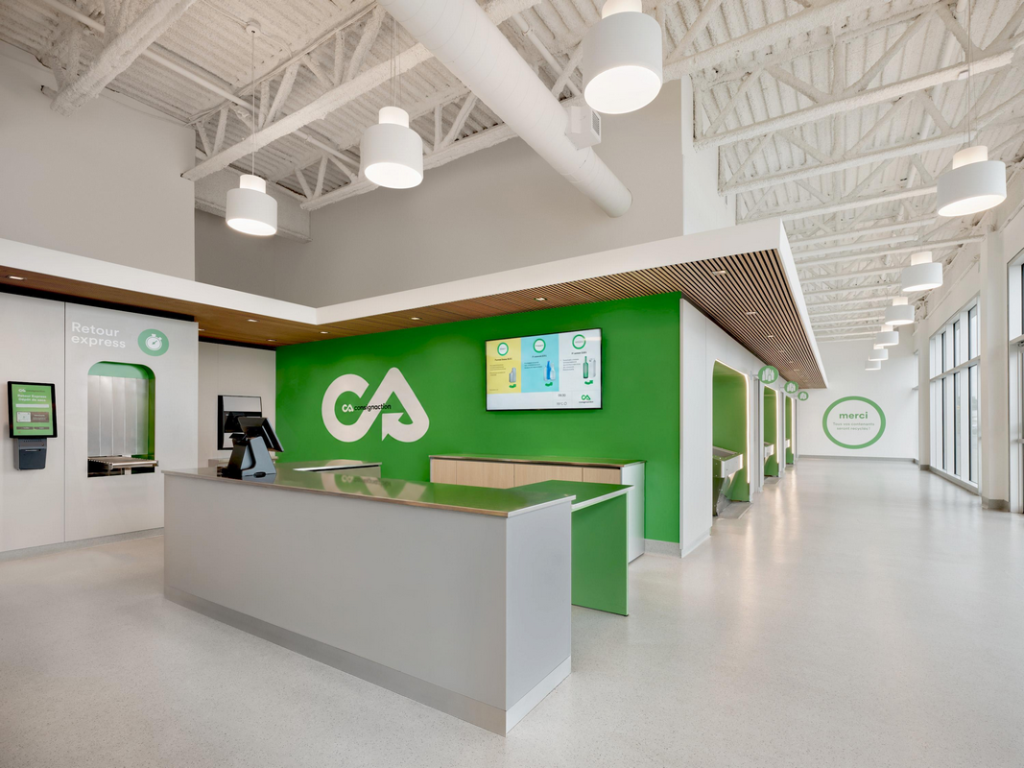
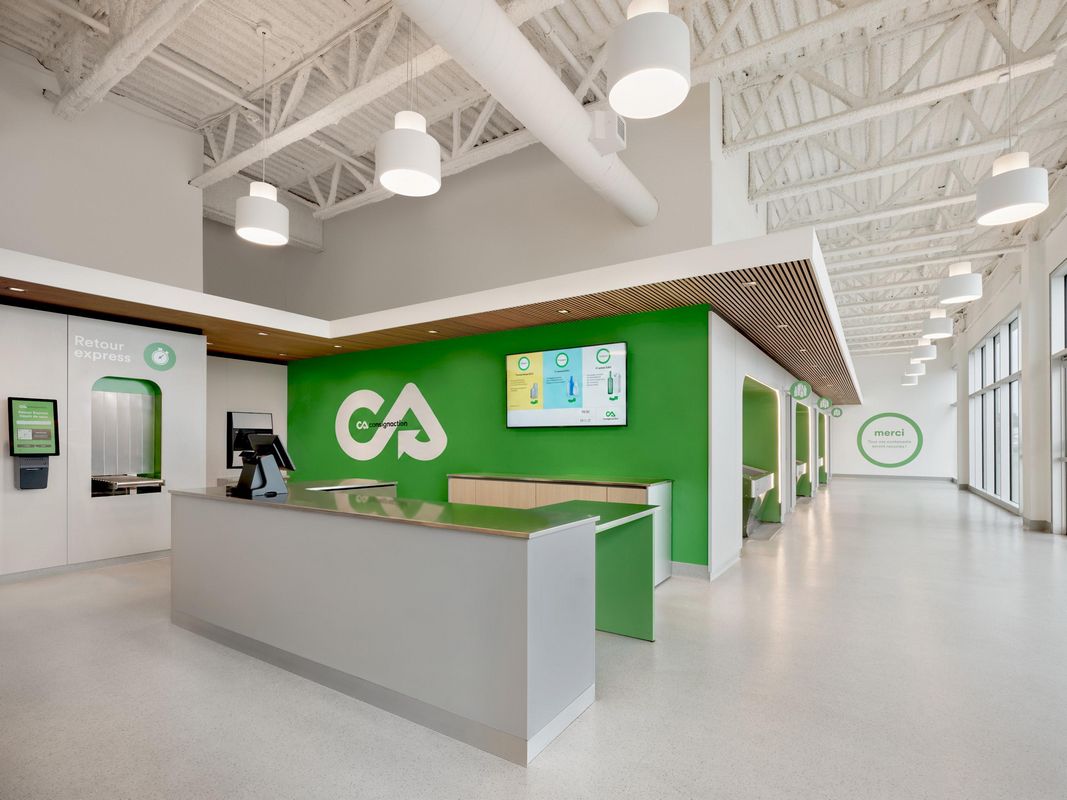
VAD Designers d’espaces has developed a scalable architectural and interior design framework for Consignaction, Québec’s expanding network of beverage-container deposit-return sites, commissioned by the Québec Beverage Container Recycling Association (QBCRA).
Designed to accommodate different sites, the project transforms a traditional utilitarian service into a public experience that supports the province’s transition toward a circular economy.
Consignaction is expected to grow to 400 locations. Rather than designing a single facility, the team created a scalable spatial identity capable of adapting to diverse sites while maintaining a consistent user experience and architectural language.
The project reconsiders the conventional bottle-return site, often located inside grocery stores, by organizing the process around clear circulation and accessibility. Returning beverage containers is no longer treated as a functional task but as a meaningful everyday action that reflects Québec’s environmental ambitions and encourages participation in the circular economy.
To support a variety of operational contexts, the design framework was developed around two complementary formats: Consignaction, serving urban environments, and Consignaction+, designed for larger, high-volume facilities. Both share the same design principles while remaining flexible enough to respond to different building conditions and operational requirements.
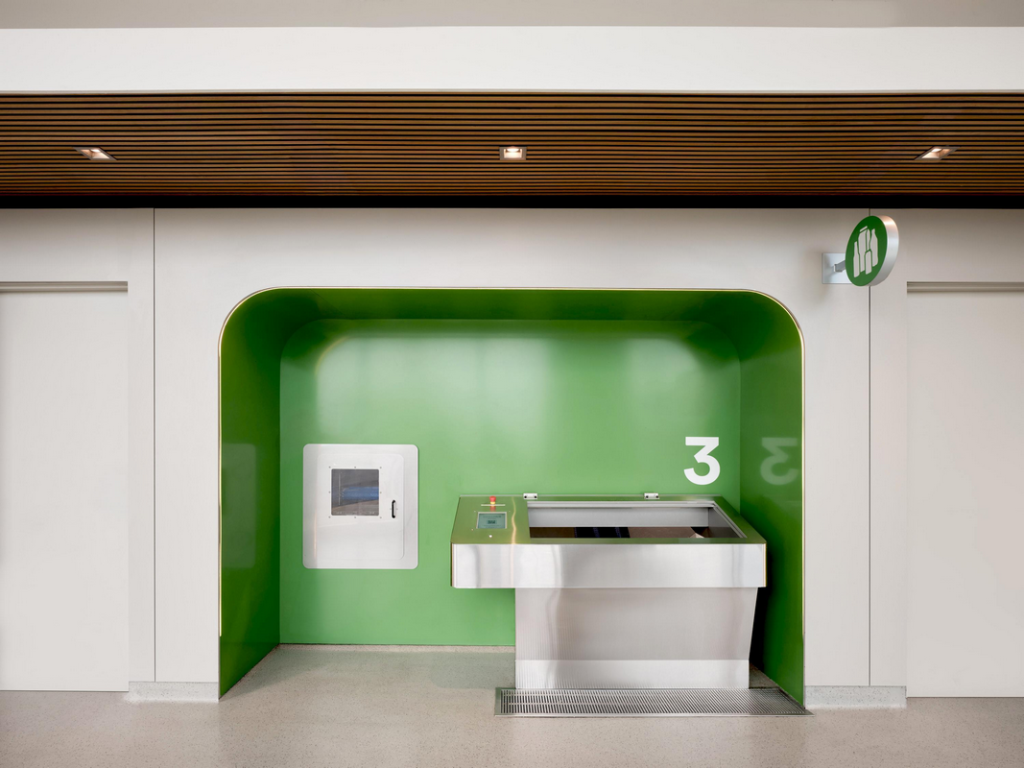
Developed through a close collaboration between VAD Designers d’espaces and Consignaction’s internal specialists, the project balances technical performance with user experience. The design addresses accessibility, sustainability, and inclusivity as the foundation of the design process.
Reconciling operational requirements with architectural quality presented a unique challenge. Hygiene, safety, odor control, durability, vandalism resistance, and operational efficiency all had to coexist within environments that feel welcoming rather than industrial. These requirements informed the selection of materials, equipment, and spatial layouts.
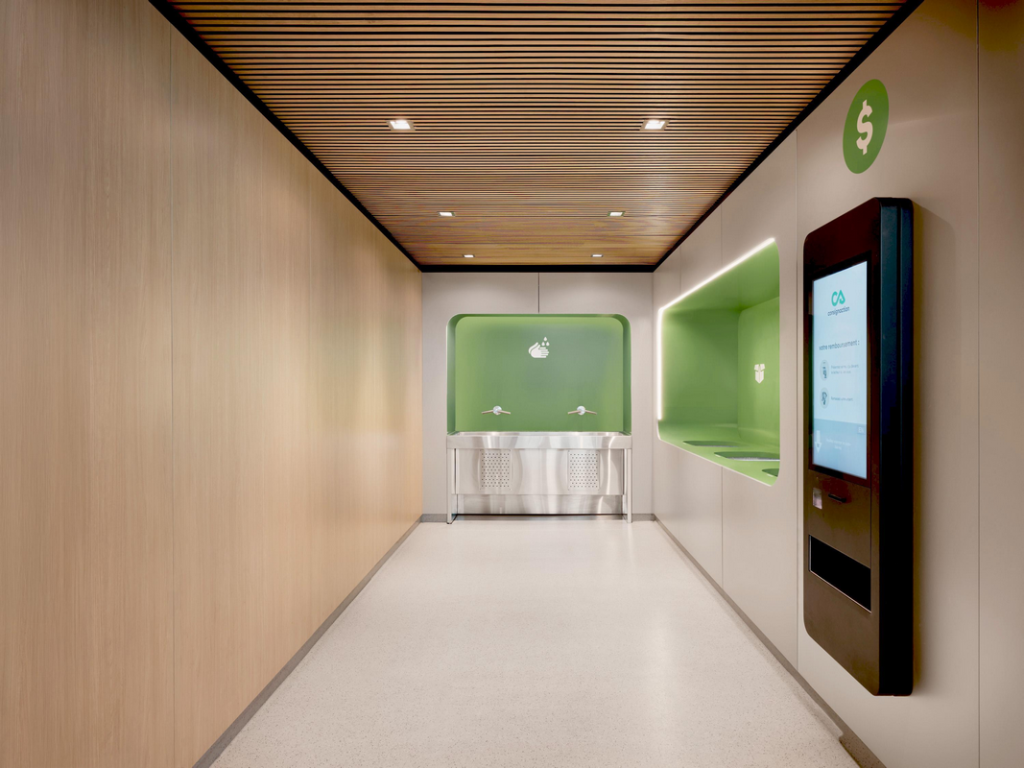
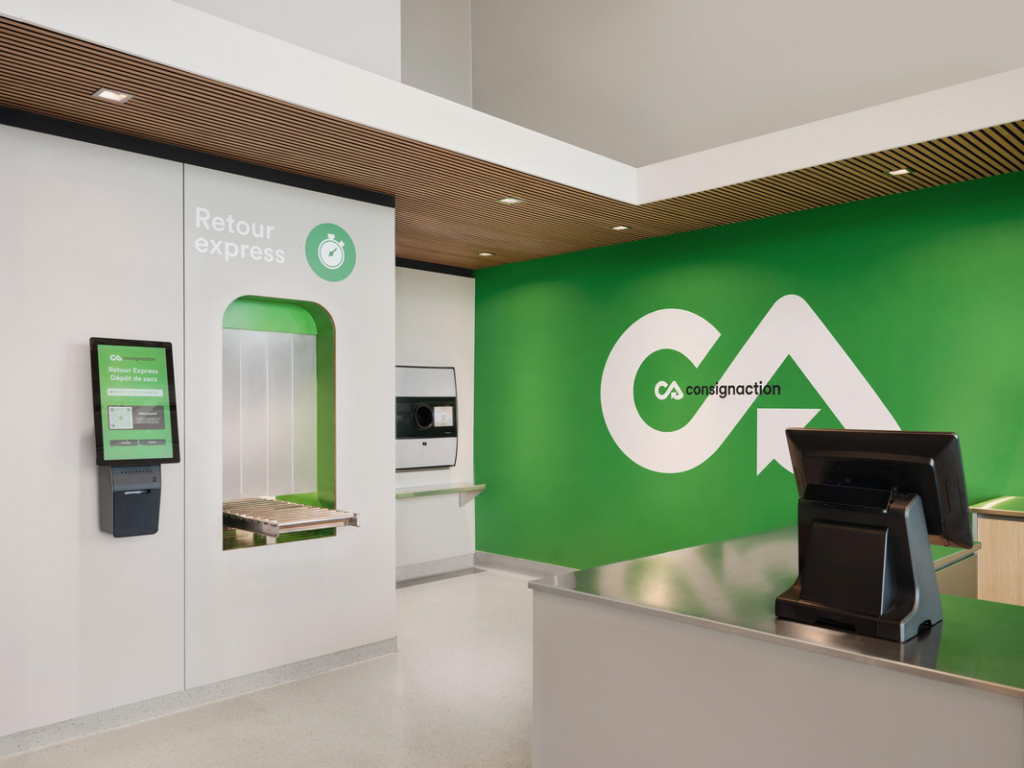
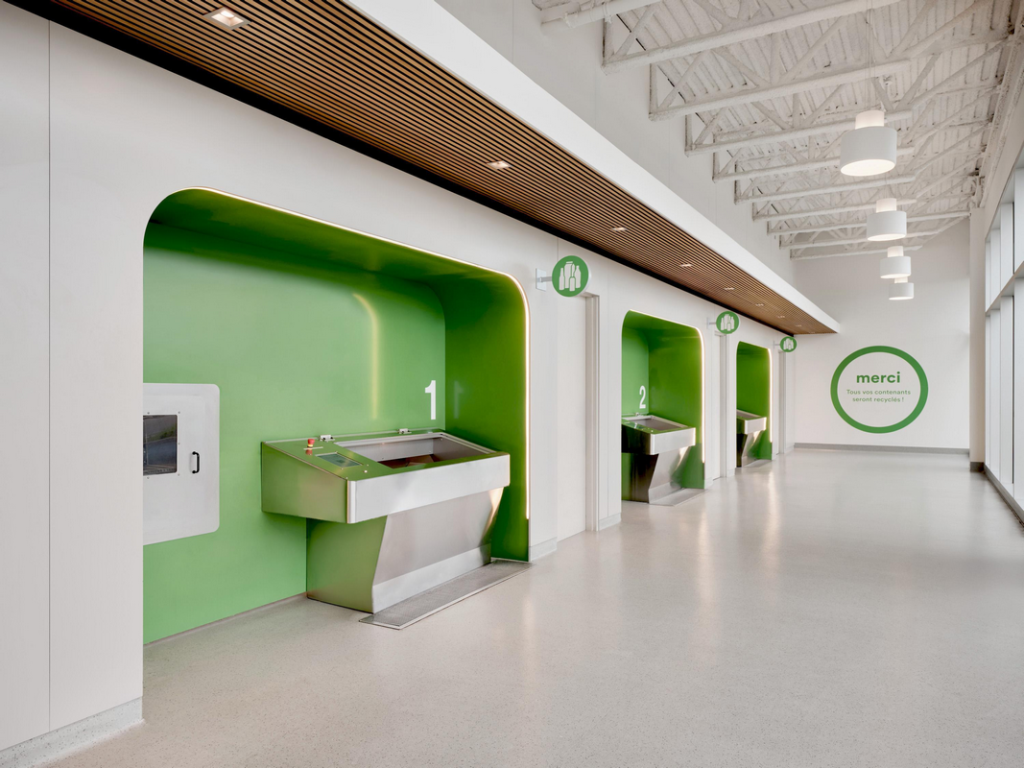
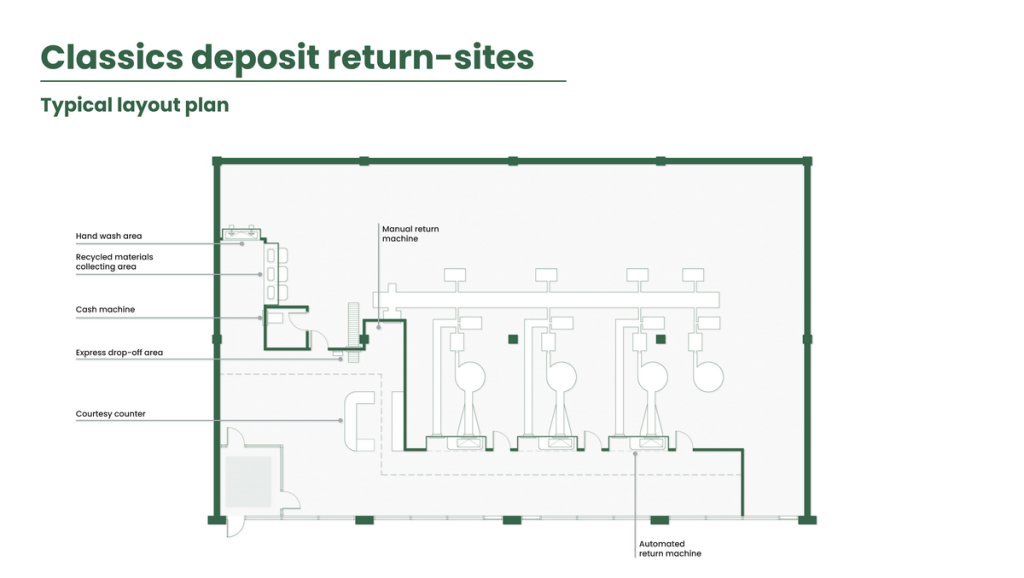
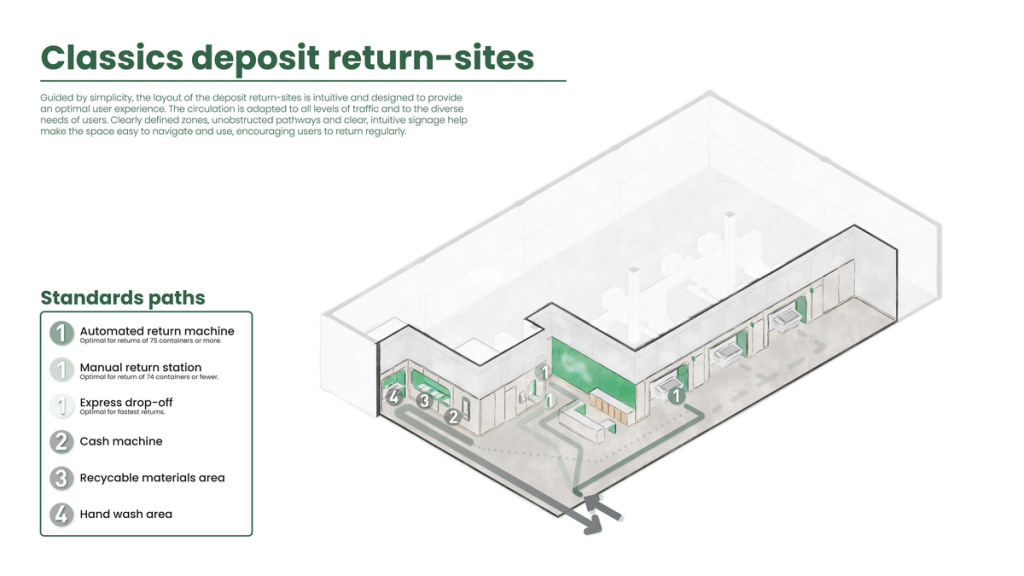
Recognizing that every visitor approaches the return process differently, the sites are designed around three complementary user journeys. High-volume automated return stations accommodate customers returning large quantities of containers, while individual return machines are designed for more conventional visits. An express service allows users to drop off their pre-sorted bags with staff and continue their day with minimal interruption. This flexible spatial strategy also allows visitors to choose the experience that best matches their needs.
The spatial organization reinforces this approach through clear sightlines, carefully planned circulation, and streamlined layouts that reduce confusion and make navigation easier.
Materiality plays an equally important role in shaping the experience. The palette draws inspiration from the materials circulating through the sites: the subtle tones of recycled glass, aluminum, and other recovered resources inform a restrained composition of neutral finishes. Pale wood introduces warmth, softening an environment traditionally associated with industrial operations while reinforcing comfort.
Durability and sustainability were at the heart of this project. Every material was selected to withstand intensive daily use while minimizing long-term maintenance requirements. Interface’s Norament rubber flooring provides resilience, Formica wall panels facilitate cleaning and maintenance, and custom steel elements fabricated by Atomic Soudure integrate operational equipment into the architectural language. Lighting by Eureka contributes to a bright and welcoming atmosphere. Furthermore, products manufactured in Québec were prioritized whenever possible to support local expertise alongside ecological responsibility.
Environmental comfort was equally important. Acoustic treatments reduce reverberation generated by continuous operational activity, carefully selected finishes facilitate cleaning while meeting demanding hygiene standards, and dedicated odor-management strategies help redefine expectations of what deposit-return sites can be.
Ultimately, Consignaction demonstrates how thoughtful design can elevate everyday public infrastructure. As the network continues to grow across Québec, these new sites establish a contemporary architectural model for circular-economy infrastructure.