


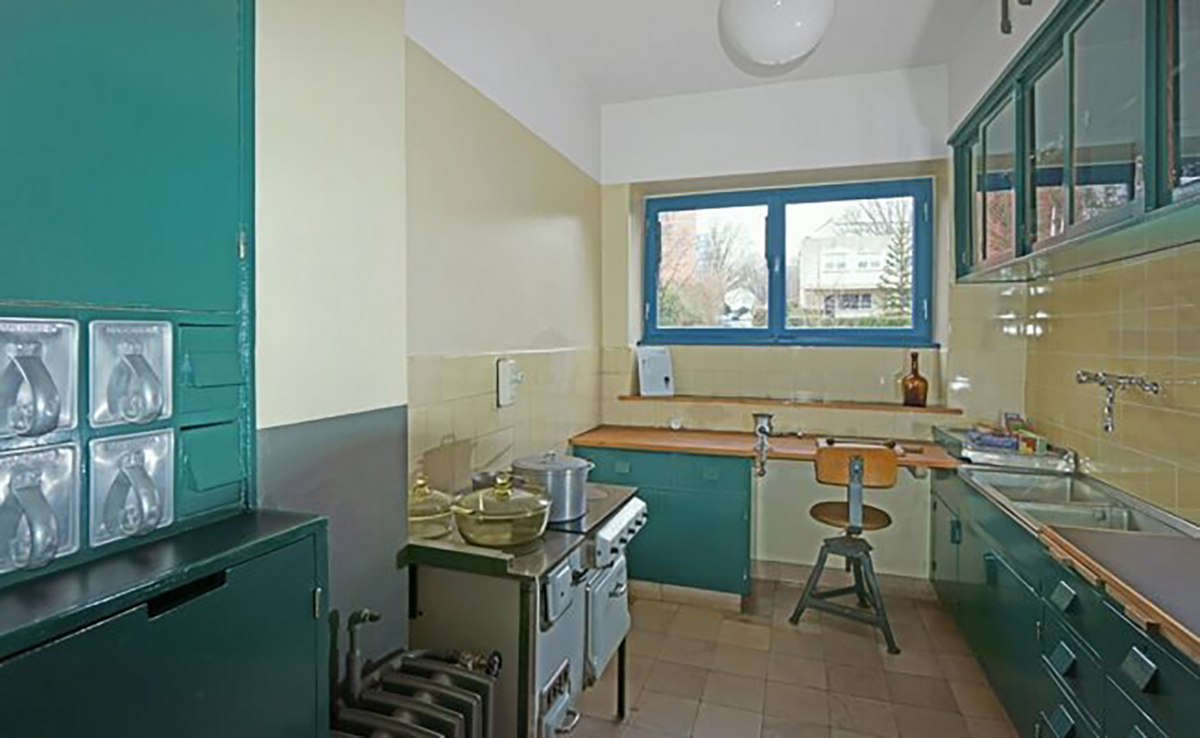
The Kitchen That Changed Everything. Almost.
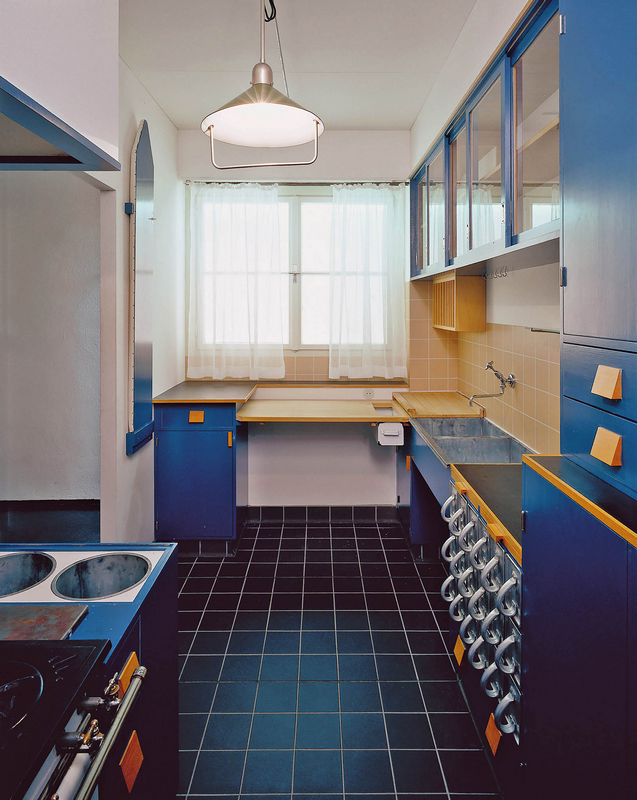
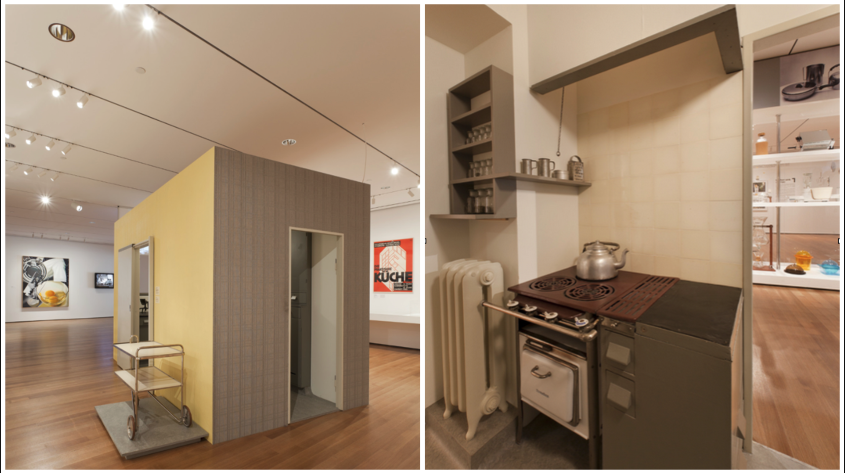
In 1926, Margarete Schütte-Lihotzky invented the kitchen as we know it. Working with fellow architect Ernst May, the Austrian designer re-imagined domestic food preparation through the lens of spatial efficiency, labour, functionality and mass production. Designed for May’s landmark New Frankfurt social housing project, the 6.5-square-metre design was a key precedent for the ubiquitous modular and fitted kitchens we know today. A century later its design legacy continues to resonate, as evidenced by The Frankfurt Kitchen & bulthaup, an exhibition putting the historic design into conversation with contemporary Canadian life.
Tracing a lineage from Schütte-Lihotzky’s modest galley to the present day, curator and German-Canadian designer Udo Schliemann begins the story in Weimar Germany. “As the country emerged from the First World War, it faced years of lost housing investment and a housing shortage not unlike the one facing Canadian cities today,” says Schliemman. Into that void came a new design culture of right angles, simple boxes and universal solutions, prioritizing scientific efficiency over ornament. When May became Frankfurt’s building councillor in 1925, he asked Schütte-Lihotzky, one of Austria’s first women architects, for a kitchen that could be replicated by the thousand.
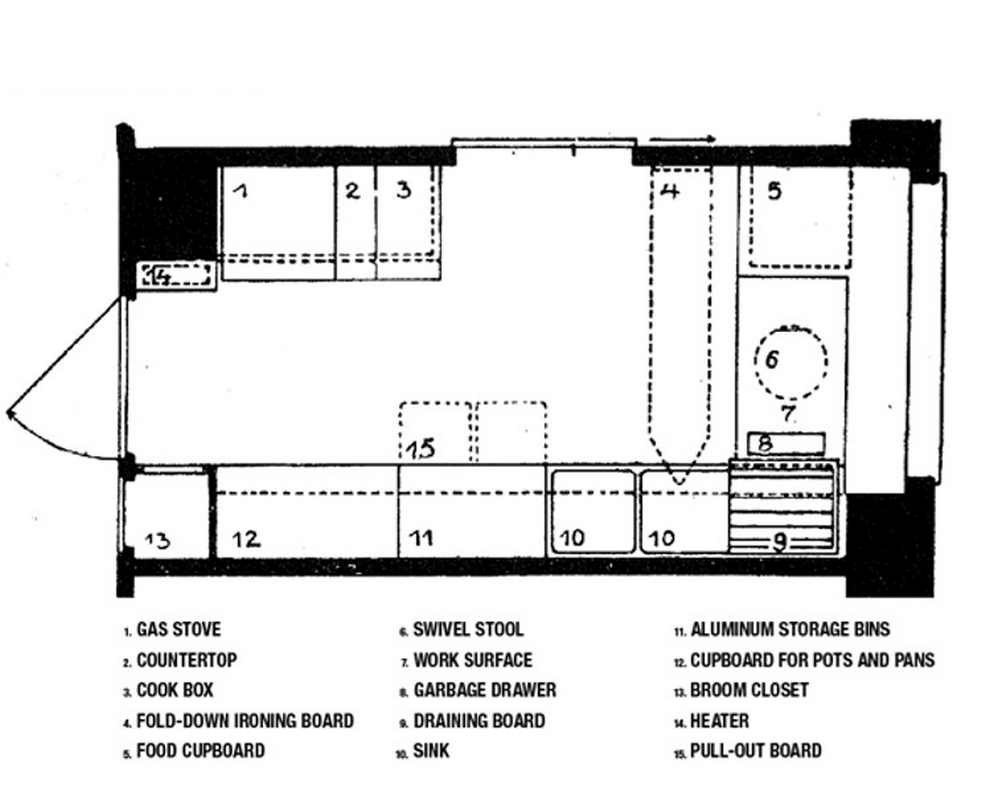
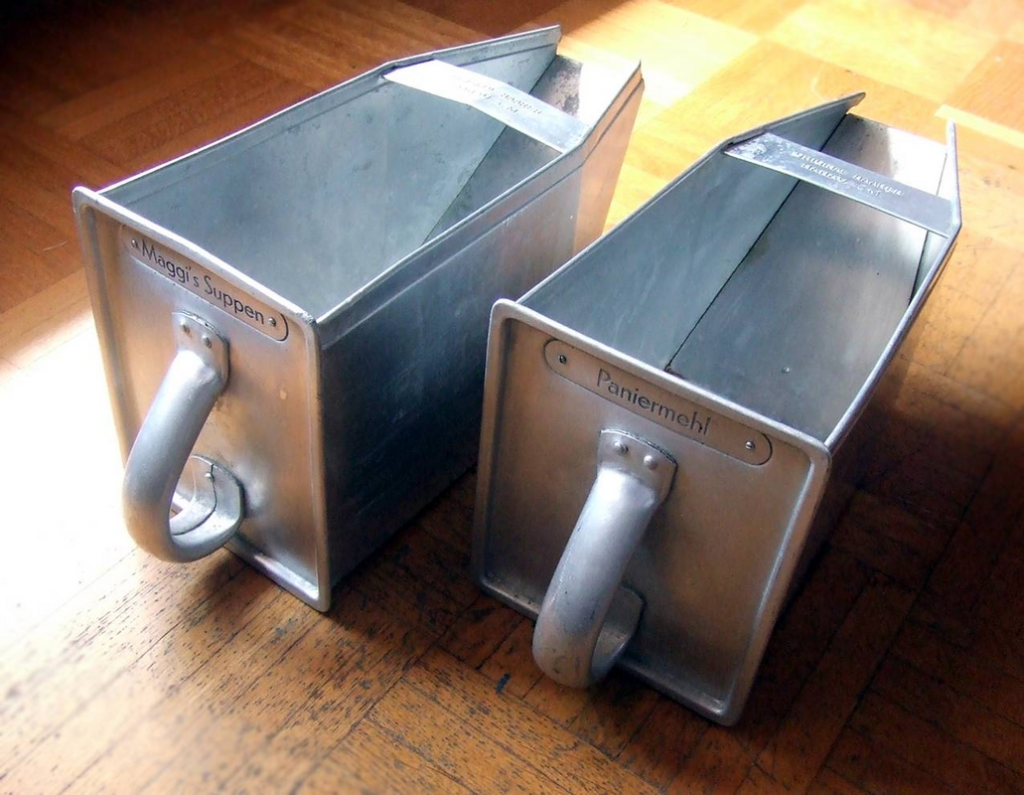
Exploring the exhibition’s themes on a panel with designer and educator Ruth Spitzer along with Daniels Corporation architect Marco Chow, sponsored by Design Industry Advisory Committee (DIAC) at the Goethe-Institut Toronto, Schliemann framed the history through the German concept of Sendungsbewusstsein: a sense of mission. The result was a narrow galley laid out like a production line. Borrowing from railway dining cars and Taylorist time and motion studies, Schütte-Lihotzky arranged counters, sink and stove so that each task flowed into the next, adding a fold-down ironing board and labelled aluminum bins for flour and sugar. Even the blue paint had a purpose: flies were thought to avoid it. In the 1920s, some 10,000 Frankfurt Kitchens were installed in the city’s new housing estates, with a variation of the model subsequently adopted in the Soviet Union, where Schütte-Lihotzky and May both subsequently worked.
For her part, Spitzer recalled seeing the Frankfurt Kitchen in situ. As a design student in the 1990s, her professor, the design historian Lore Kramer, took the class to a tenant’s doorstep in one of the estates. Kramer knocked, and the students filed through one at a time. “It was very claustrophobic,” Spitzer recalled. By then, most of the kitchens had been torn out and sent to landfill. The social results were mixed. Schütte-Lihotzky hoped that by cutting the steps between tasks, she could free women’s time for life beyond the kitchen, but “it kind of backfired,” says Schliemann: the time saved was filled with other unpaid work, while women were now isolated in a cramped room built for one.
Although the Frankfurt Kitchen is sometimes described as a proto-feminist design, Spitzer is wary of the framing. “Schütte-Lihotzky, who didn’t cook, approached it as a male architect would have, and he also would not be cooking,” Spitzer noted. Moreover, many residents disliked it. The flour bins sat low enough for children to play with, and the bins chronically became damp. “In a sense, it was a design failure,” said Spitzer.
So why are we still talking about it? For Schliemann, the answer lies in a lineage. His exhibit at bulthaup Toronto, on view until the end of January, places Schütte-Lihotzky’s kitchen in dialogue with a later chapter of German design: bulthaup’s collaboration with designer and typographer Otl Aicher. Together with Gerd Bulthaup, Aicher spent two years visiting the kitchens of top restaurants to see how professionals actually cooked, producing the influential 1981 book Die Küche zum Kochen (The Kitchen for Cooking), as well as a rational approach to kitchen architecture that continues to shape bulthaup design. “This idea of universal design, of a simple, basic formula based on scientific belief and technological innovation, that is the common bond between all three,” says Schliemann.
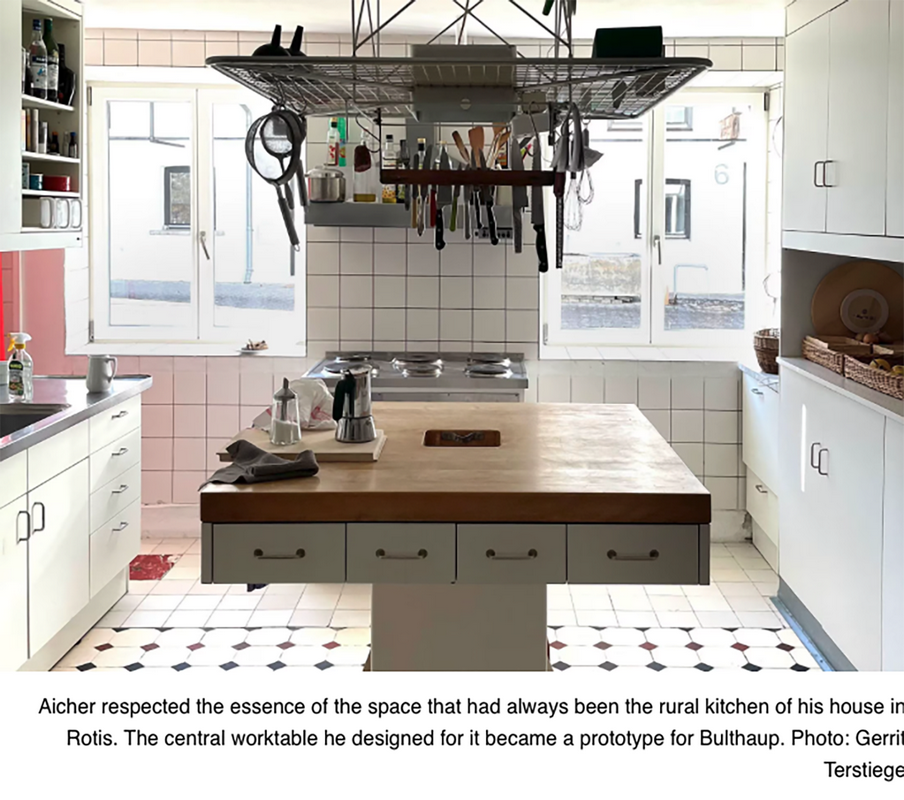 For his part, Chow sees clear traces of the Frankfurt Kitchen’s DNA in how kitchens are still made. “It’s standardized, optimized and mass-produced, which is very much the case today,” said Chow. Yet he also identified an evolution from “the idea of one kitchen for everyone.” Large developers like Daniels sell condominium units before the concrete is poured, and buyers can increasingly ask for custom options “like a lower counter or an induction cooktop with side-mounted controls, planning for the day they might use a walker or wheelchair,” Chow noted. “Since a high-rise project entails the order of hundreds of kitchens at a time, the cost of customizing a few is spread across the rest.” Today, one surprising outcome of mass production and economies of scale isn’t growing universality but increasing customization.
Taking a longer view, cooking and food preparation organized around the nuclear family and the individual home is itself a recent phenomenon. For much of human history, cooking was a communal, neighbourhood-level affair, a type of arrangement arguably now returning in a contemporary, technologically-driven guise. Case in point? Enter an apartment lobby on any given evening and count the couriers. The meals themselves come from traditional restaurants, many of which are being adapted to better serve takeout and couriers, but also delivery-oriented “ghost kitchens” that increasingly — but almost invisibly — dot our urban fabric. What’s more, collective living arrangements are slowly becoming more common. As Spitzer put it, it adds up to a context in which “the kitchen of the future might be no kitchen at all.”
For now, at least, the Frankfurt Kitchen’s century of heritage offers a valuable rearview clarity, revealing how design, technology, social evolution, culture and economy all intersect. Tracing the history — including where it went wrong — not only helps us think more clearly about the kitchens we design today, but about the broader social questions of who cooks, who serves, and who gets to eat.