


Staying in Character: Union Hotel & Four Seasons Toronto
When the 47th president of the United States of America was inaugurated, few would have expected that such an intense spotlight would come to illuminate Canada rather than its southern neighbour. As threats of tariffs renewed a dormant sense of nationalism north of the 49th parallel, flows of U.S. travel slowed in favour of efforts to bolster regional and national tourism. A relatively weak Canadian dollar, comparatively, further turned the country into an attractive destination for international travellers seeking to strategically skirt any support of the American economy. Accordingly, recent reporting by The World Travel & Tourism Council (WTTC) notes travel and tourism in Canada is set to reach record-breaking levels this year. It’s a trend not going unnoticed by hospitality brands, directly implicating how designers are being tasked with imbuing their projects with an elusive and often intangible national character.
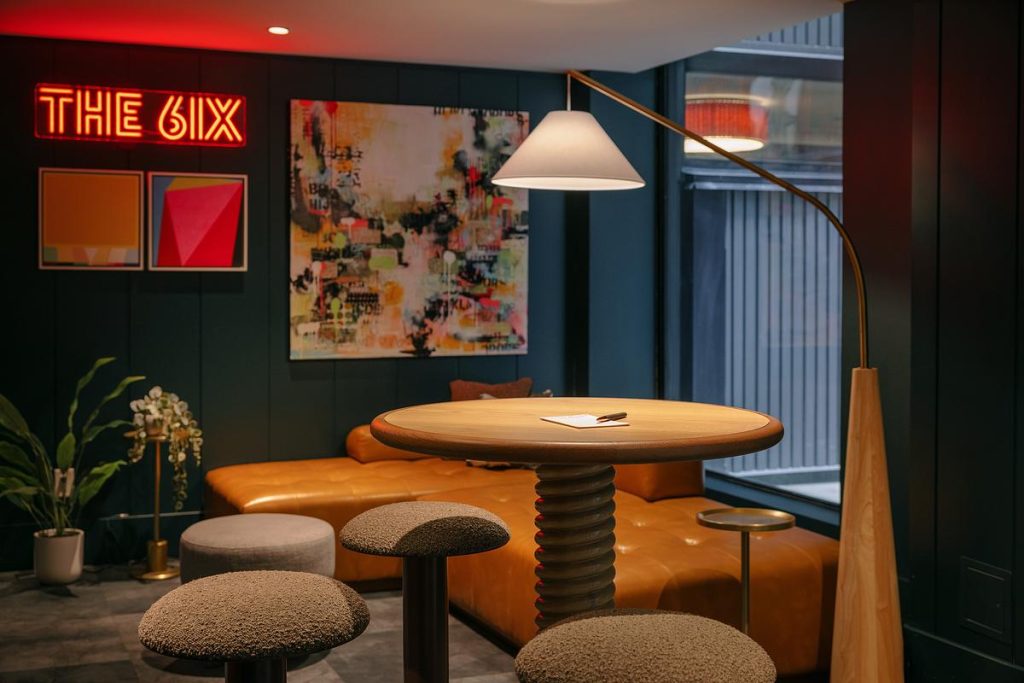
“The quality of hospitality is very high here,” explains Kristen Lien, principal of Calgary- and Banff-based Frank Architecture, on the further draw of Canadian destinations like Toronto. The veteran practice — now synonymous with elevated food and beverage offerings in the Prairies — has been slowly increasing its presence in the Ontario capital, culminating in the recently opened Union Hotel. Following a successful collaboration on the Westley Hotel in Calgary, the studio was approached again by the Silver Hotel Group to reimagine the former 189-room Strathcona Hotel in downtown Toronto as a novel boutique hub. While strategically located amidst office towers and local landmarks like Union Station, the 12-story building needed a significant overhaul to re-evaluate its offerings and re-articulate its connection to the city.
“We talked about the project as needing to be this place where different walks of life meet,” Lien says, “and a sort of armature for culture.” To wit, the designers looked to the history of the area, particularly the adjacent garment district, to craft the rebranded hyperlocal lifestyle property. What emerged was the “idea of the tapestry,” she adds, as a nod to both the site’s industrial heritage and the qualities of the city itself: an evolving network of cultures, neighbourhoods, industries, practices and people woven together. “There’s something to be said about the authenticity of a concept,” she asserts, “and tying it back to a string of local context or the place that the property is grounded in.”
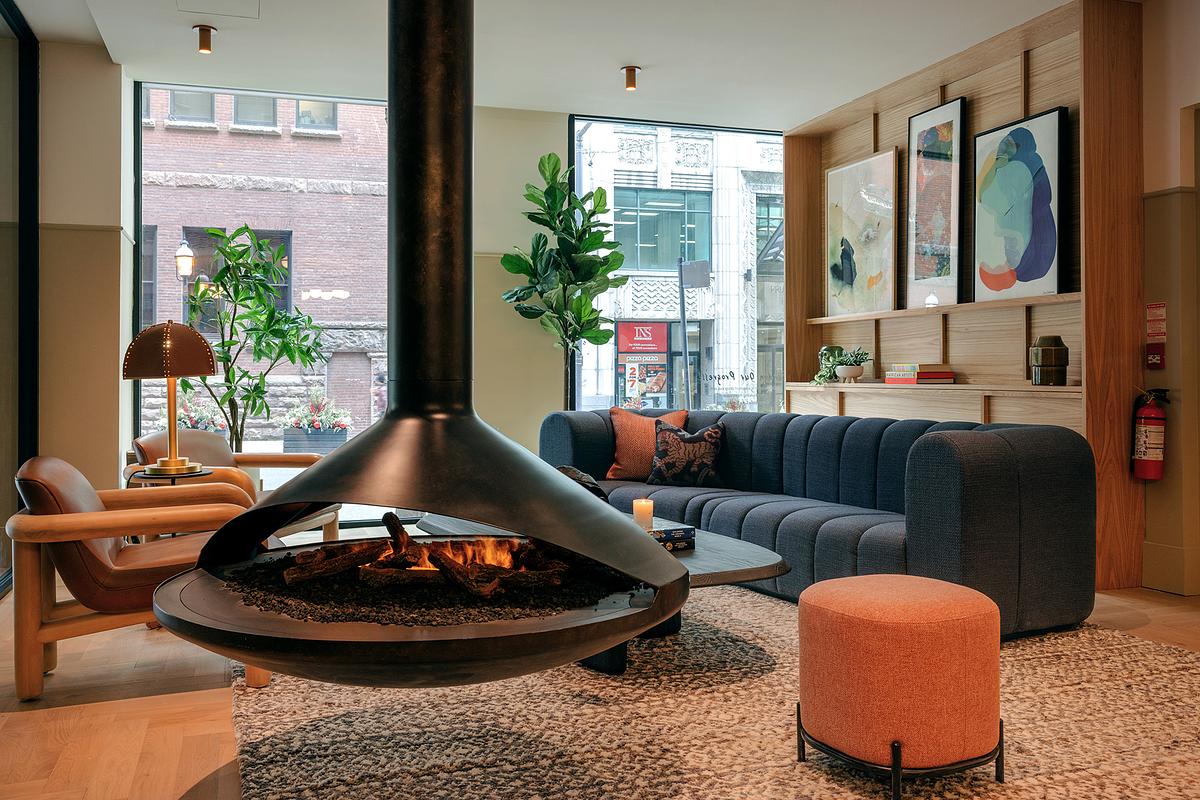
At Union, this authenticity manifested as both literal and figurative gestures extending from collaborations with local artists and makers to planning considerations that focused on bridging the interior with the streetscape. In the spartan rooms, layered materials ranging from geometric tiles to upholstery refer to the city’s rich history of textiles, while the limited footprint forced the designers to reconsider the expanded social role of the public amenities. Locating the concierge at the rear of the ground floor provided room to situate gathering spaces along the street. Open seating interspersed with private meeting zones and space for congregation across the lobby lounge further centre the hotel as a “launch pad” for guests. Alongside, operable windows create further visual and formal connections that intermingle travellers with passersby. The cumulative effect is akin to an urban living room anchored by a suspended fireplace.
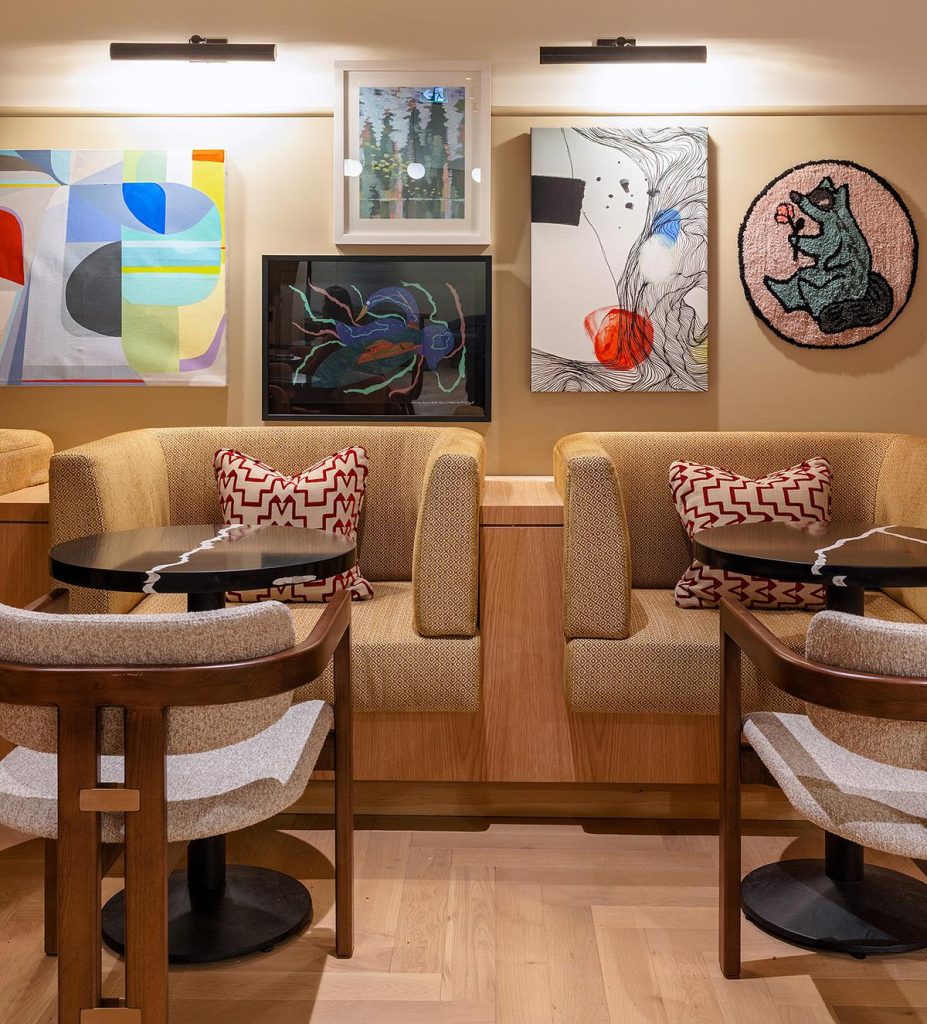
“When people are travelling, especially for leisure, they’re coming to explore a place: the food, the natural environment or the culture,” she concludes. “We aimed to tie into the authenticity of that experience.” Within these spaces, Toronto-based artists were enlisted to create custom murals evoking distinct aspects of the city and its milieu, including a vibrant piece by Hello Kirsten (Kirsten McCrea) along the banquets in the Humble Donkey café and lounge that draws influence from nearby art deco architecture, railway lines and, fittingly, textile histories. These softened geometric forms are carried throughout, from low reliefs in the wood-clad bar to the arched niches beyond. With leading national producers and creators providing everything from coffee to toiletries to the books lining the ground-floor library, this emphasis on craft is quite literally woven through the entire project.
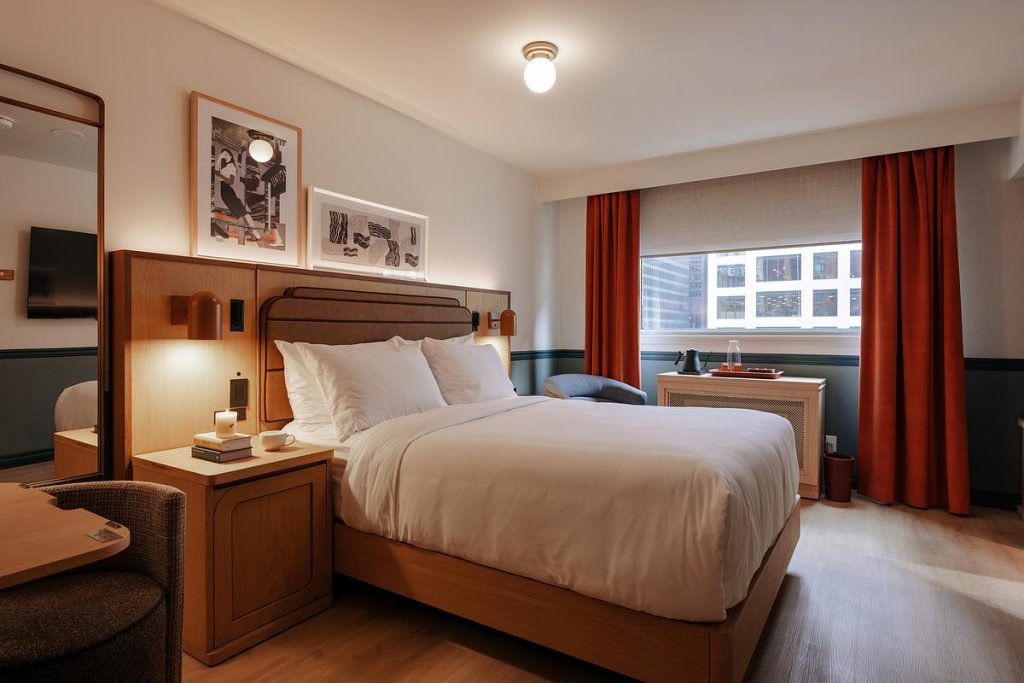
Only a few blocks north, local practice DesignAgency faced similar challenges in reworking 259 guest rooms and suites for the Toronto flagship of the Four Seasons Hotels and Resorts. The premier Canadian luxury brand looked to the practice to renew the decade-old accommodations, with the refreshed interiors unveiled in May of 2024. “The brand has a lot of history here, which made reimagining the guest rooms and suites for the flagship’s next chapter especially meaningful,” says founding partner Anwar Mekhayech, It also brought with it its own set of challenges in expressing the nuanced qualities of Canada’s largest metropolis while meeting the expectations of an international hospitality leader. Balance was essential, not only “between the energy of the city and the calm of nature,” Mekhayech adds of the direction, but “between past and present, and between the look and feel of a specific place versus the essence of a global brand.”
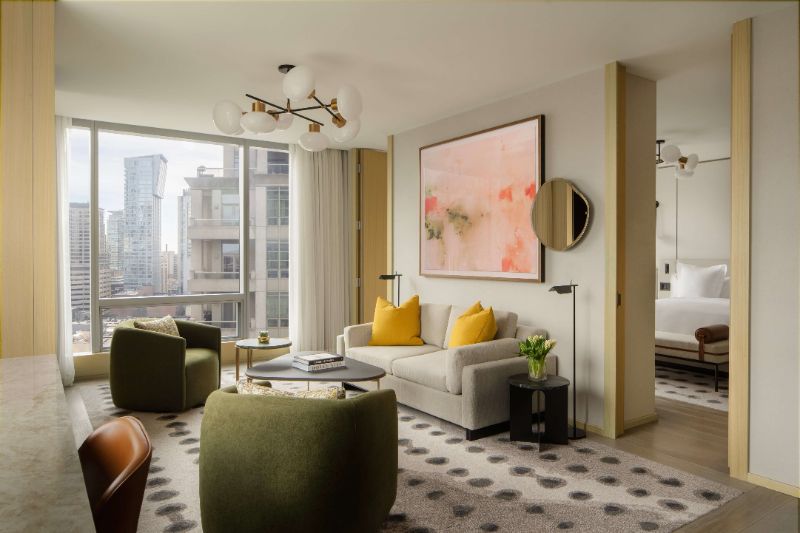
To capture both the identity of Four Seasons and its significant Canadian outpost soaring above the city’s Yorkville neighbourhood, Mekhayech and his team riffed on the immediate landscape, namely the expansive ravine system interspersed with lush forests and tributaries that define the topography of the metropolis. Green was deliberately employed throughout as an accent to evoke “Toronto’s reputation as a city within a park,” according to the designer, while more overt references to natural features were picked up in a custom dotted rug resembling rocks eroded by the nearby Don River. The slab stone of the elemental side tables makes references to iconic national features such as mountain ranges and the Precambrian rock of the Canada shield with bronze details, grey tones and a series of warm wood accents rounding out a rich palette typical of the elevated outposts operated by the luxury resort company.
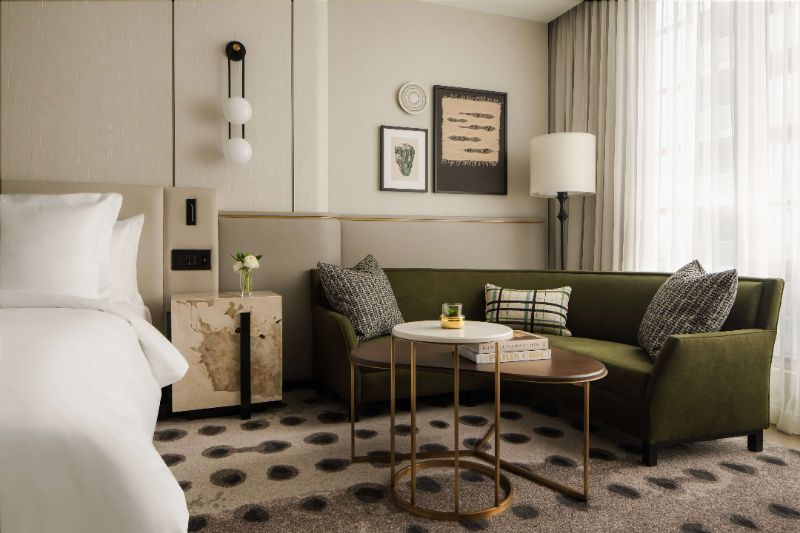
Alongside curating work by local artists to aid in “establishing a sense of place” and direct views out toward sprawling civic vistas, the designers also ensured leading manufacturers were another key component in the concert of contextual references. For example, custom furnishings including sofas, loungers, banquettes and re-upholstered chairs were provided by Toronto-based furniture maker Louis Interiors Inc., while Markham Ont.-based Suite 22 crafted the sleek benches nestled at the end of each bed. Even the headboards and nightstands, both provided by St. Clemens, Ont.-based Artco Hospitality furnishings, reflect this commitment to local producers.
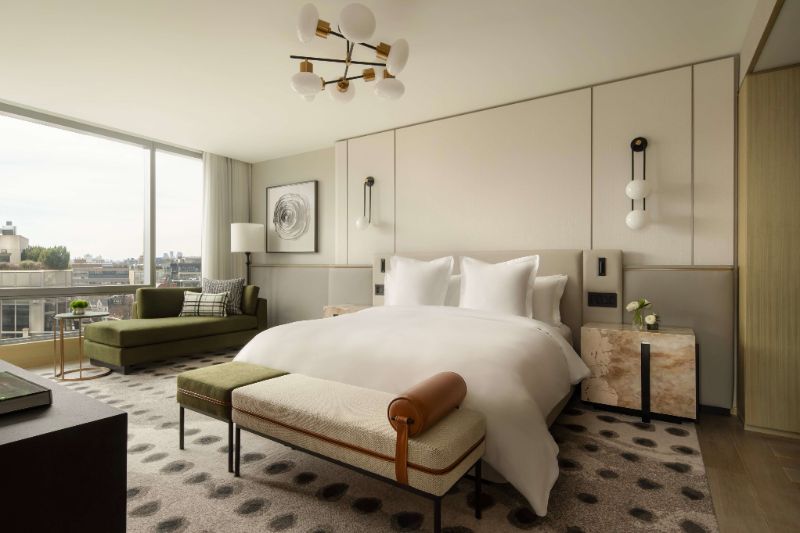
Rather than shallow and outmoded references to Canadiana, the interiors of Union Hotel and the Four Seasons, instead embrace the many hands and voices shaping the culture of thriving national centres like Toronto. Context became not only a material strategy picked up in finishes and furnishings, but a critical tool to meaningfully root each element of a project and its subsequent visitors in the ever-shifting and evolving culture of its place through the lens of those who forge it: one underpinning the very desire of travellers in the first place. From textiles to topography, streetscapes to skylines, these subtle yet meaningful connections to history and geography, coupled with collaborations with eminent makers, “play a pivotal role in the aesthetic narrative,” according to DesignAgency, for established brands and novel concept-driven spaces alike. Or, as Lien succinctly notes: “Telling that authentic story is the most important.”
As featured in the September-October 2025 issue of Canadian Interiors magazine.