
As cities evolve along with technology, buildings tend to become more mechanistic and less connected to nature. Yet modern construction and design doesn’t have to be in opposition to nature, but rather a myriad of strategies exist that enable humans to feel more connected to their surroundings.
Heimtextil in Frankfurt presented a comprehensive overview of an industry being inundated by advances in technology at almost every level.
Providing a home away from home for students amid housing affordability challenges is a tall task for universities.
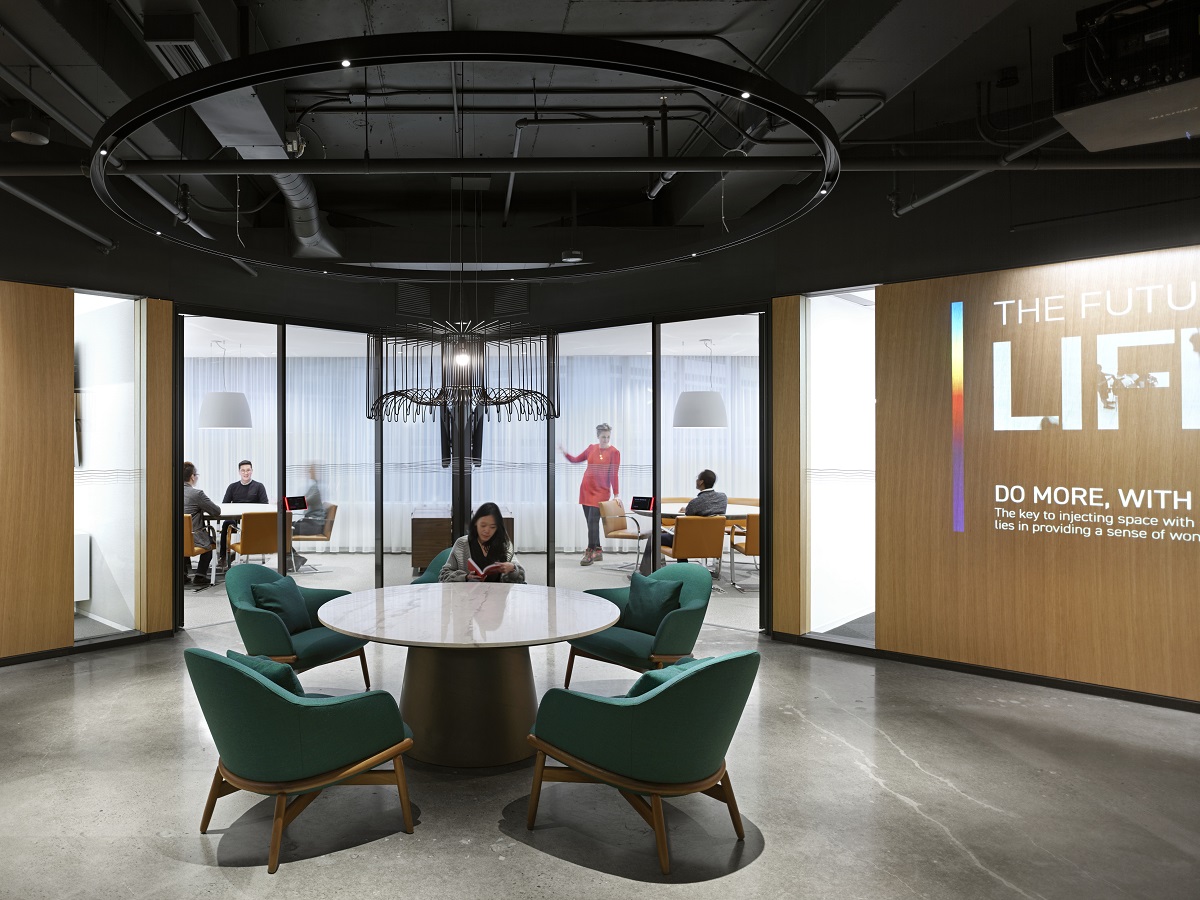
Gensler Toronto (© Ben Rahn/A-Frame)
Editor’s Note: Below is a blog post that first appeared August 21, 2023 on Gensler’s Research & Insights webpage (reposted with their permission) and is part of a series on their new Product Sustainability (GPS) Standards. Click here to read more about what the GPS Standards mean for the industry and for Gensler’s sustainability…
Spaces designed with biophilic principles are gaining popularity, but greenwashing is lurking around the edges and creeping into the messaging.
Air quality expert, Jon Douglas, shares advice for protecting indoor air quality in homes and commercial buildings during extreme weather events such as wildfires.
One of the most important actions the textile industry can take to bring about meaningful and significant change is the transition to a circular economy.
Wayne Turett’s all-electric, energy-efficient home on the North Fork of Long Island, NY consumes ~90 per cent less heating energy than existing homes and promotes outstanding air quality. (Photo: Liz Glasgow)
The following situation is not uncommon: an architect, aware of the environmental damage that construction and building can impose on the planet, is an advocate…
Leveraging trauma-informed design in the workplace.